Showing posts with label Armitt. Show all posts

20 Nov 2014

Lessons from the Armitt II

The study of natural history and botany with bird lists and plant lists continues throughout school life, while other branches of science are taken term by term.Charlotte Mason, Towards a Philosophy of Education, p 220

Until I read Laurie Bestvater's book, The Living Page, I didn't know much about Charlotte Mason's Bird and Flower lists. Okay, actually I knew nothing about them at all. The quote above, is, I think, the only mention of them in her writings, and I guess I'd just skipped that sentence, without giving it much thought.

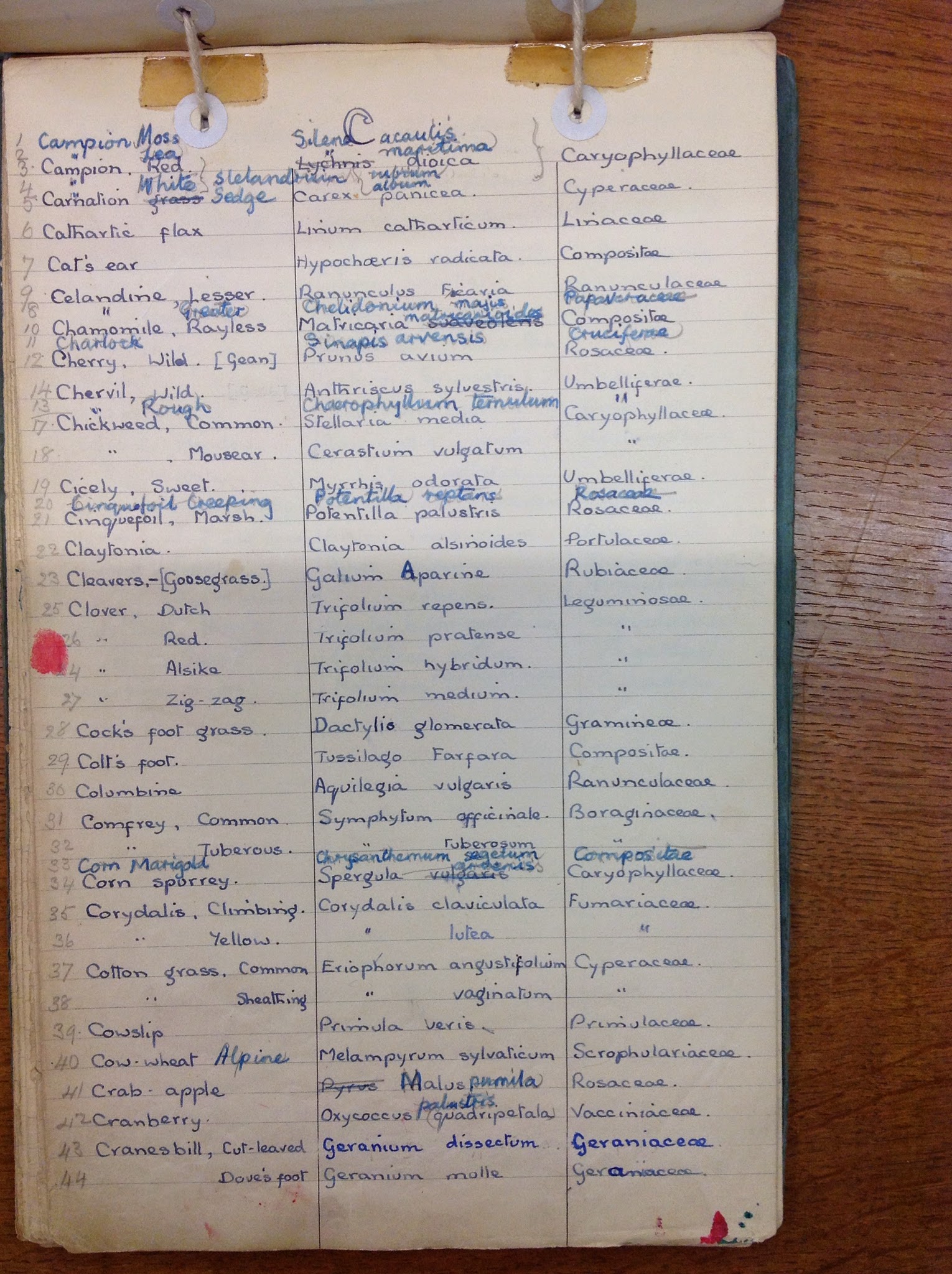
When I visited the Armitt Museum and actually looked at the Nature Notebooks stored there, though, I was struck by these lists. In particular, I was impressed by how little they changed from 1900 to 1950. In all the samples, the lists were there, and they were pretty much the same. I was also impressed with how easy these lists were.

Sample number: Name: Latin Name: Order: Date seen.

That's about it.

Let's have a look at some pictures, shall we, so you can see what I mean. Firstly, the flowers:


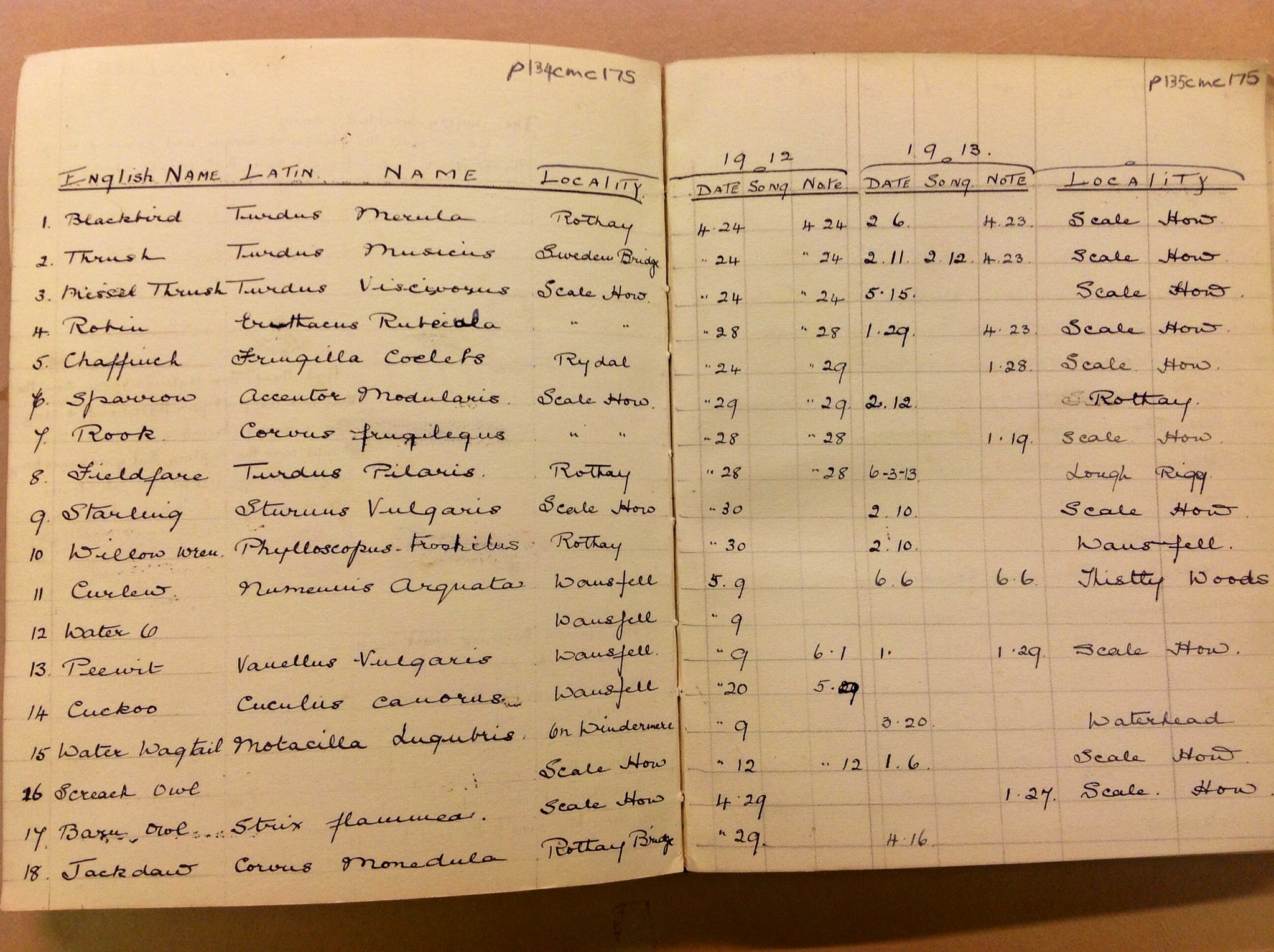


Then we have the bird lists:


And it's as easy as that. Page after page of lists, all very similar to the one before.
The next series pf photos shows you inside two lists that appear to have been kept by the entire school. The first list is just like the individual one; the second book contains the flowers in more-or-less alphabetical list. Simple, aren't they?




Keeping these bird and flow lists is fun, and quickly becomes pretty addictive. To give you an idea, here's a couple I've kept on my recent trips.


The next four photos are lists that Eve Anderson kept later in life, including during a trip to Zimbabwe in 1985. It seems list keeping is a lifelong joy!


Remember how I keep saying we make Charlotte Mason too hard? These pages remind me of this, because bird and flower lists are so easy. Even the youngest child can start keeping lists with mum writing them down. Do you have a list of birds that visit your bird feeder or your backyard? Make one. What flowers grow in your garden? Your local park? Your wildlife reserve? Take along a field guide and identify them. Write them in a list.

Lots of us procrastinate over lots of things in CM, but these lists are things you can start today. Take a look out of your window right now. What can you see? Even sparrows belong on a list. So do the weeds growing through the cracks in your driveway. They do have a use!!

Every notebook we looked at at the Armitt contained a bird and flower list, no matter how complete they were otherwise. Aren't you inspired now to keep one too?


More Lessons from the Armitt coming soon!

Find the start of the series for more lessons here.

15 Oct 2014

Lessons from the Armitt I


This was actually supported to be Lesson II, only Lesson I is taking too long to write, and so I thought I should move on and actually get something into print. I'm sorry for the delay. It's the story of my life, I'm afraid.

Today's lesson is about the Book of Centuries.

Most of what we know about these history notebooks is due to the the extensive research of Laurie Bestvater. Laurie wrote two terrific articles on the Book of Centuries, here and here, followed by an inspirational book entitled The Living Page: Keeping Notebooks with Charlotte Mason, as well as publishing a pretty impressive facsimile of the books, which she makes available on her website, Keeping a Book of Centuries. I was inspired, and back in 2012,I bought two copies, one for Jemimah, and one for me.

And then they sat on the shelf. And sat, and sat. I am not a drawer, (that is, somebody who draws rather than a thing that slides in and out), and the idea of filling the pages of these beautiful leather bound books panicked me into doing nothing at all. So at the time of my trip, there I was with not one, but two, of Laurie's beautiful Books of Centuries taunting me from the study shelf.

The Armitt is the holder of a copy of a Book of Centuries kept by P.N.E.U. teacher Eve Anderson during her teacher training years, and it was really exciting holding her book and looking through its pages. And what I learned was how simple and non-scary keeping a Book of Centuries can be.
First, Eve's drawings, while significantly better than mine, we not all that amazingly good. You won't believe what a relief that was to me. Secondly, and more relieving again, there weren't many pictures at all. Eve Anderson's Book of Centuries is mostly writing.
Miss G. M. Bernau has added to the value of these studies by producing a 'Book of Centuries' in which children draw such illustrations as they come across of objects of domestic use, of art, etc., connected with the century they are reading about. This slight study of the British Museum we find very valuable; whether the children have or have not the opportunity of visiting the Museum itself, they have the hope of doing so, and, besides, their minds are awakened to the treasures of local museums.
Charlotte Mason, Towards a Philosophy of Education (1923) pp 175-6
Now I don't know if that's a good thing. This quote of Miss Mason's certainly seems to imply that the illustrations play the major part in the Books of Centuries kept by her students, but it certainly freed me up. Maybe it will you too.

On our return home, we set to to fill in our pages. The photos below show that mine is not a work of art, but it is so much fun, and every time you get it out to add to it, you remember more and more as you reread. It is incredibly satisfying, as well as serving as a memory aid.

There's a few things I find difficult, in particular, remembering that the year 1066 is in the 11th century, not the 10th, and 595 is in the 6th. That's a bit tricky. The other thing is that the writing gap is really tiny, even for me. Sometimes it brings Jemimah to her knees.

The Book of Centuries, is a great joy to the owner, and even in these busy days it is possible to find some time, however short, to add an illustration from time to time. Children always take a keen delight in their books. There is no need to be an artist in order to have quite an interesting book - neatness and accuracy are essential though. Museums will be clothed with fresh interest to keepers of these books, who will be able to recognise objects which have already become familiar old friends through their Books of Centuries.
G. M. Bernau The Parents' Review, Volume 34 1923 pgs. 720-724
You'll notice I've made some mistakes. I try to be neat and accurate, but I don't always manage. The size of the writing puts paid to neatness, as well.


Anyhow, so that's Lesson I from the Armitt. Books of Centuries are not necessarily works of art, and they're not scary. Pictures enhance what you're learning, of course, but if you're afraid, at least start on the written side. Maybe soon you'll be ready to give the drawing side a burl as well. And maybe I'll join you when you do. Maybe.

Find the start of the series here for more lessons.


17 Sept 2014

Lessons from the Armitt

And so we're home. It has been an incredible trip, filled with so much wonder that I scarcely know where to begin. Ten weeks of amazingness is just impossible to put into one post - or even ten. We've spent time in Scotland, Wales, England, France and Japan. We're attended performances of Shakespeare and Kabuki. We've stayed with friends and family, in homes, hotels, cottages, machiyas, ryokans, bed and breakfasts, and even a French chateau. We spent a week at a Bible conference, and another doing a tour of Reformation Scotland. We have thousands of photos, many of which we've been posting on A Peaceful Day's Facebook page, and I'm grateful to those of you who have followed along with us and who left encouraging comments.

With that said, probably the most interesting thing for many of you, was the very first week, where we visited Ambleside in the Lake District, and ensconced ourselves in the Armitt library to learn what we could about Charlotte Mason and her philosophy of education. I thought that I might begin there, with a few posts that together I will call Lessons From The Armitt. Because we learned so much. Mostly, that we make things much too hard. Maybe you'll get some ideas that you can incorporate into your homeschool. I hope so. I certainly did.

I don't know how many posts I'll do. Some people design series of posts and manage to see them through. Generally I'm really bad at that. I sort of lose steam halfway through. Anyhow, I'll make a start. Let's see how I go! I'll start next week.

But first, some pictures to set the scene:


Lessons from the Armitt I: The Book of Centuries

Lessons from the Armitt II:Bird and Flower Lists