30 Apr 2011

Feeling ashamed

I'm feeling a bit ashamed.

Well, quite guilty, really.

Well respected Wiradjuri Aussie author, Anita Heiss, has compiled a list of her favourite Indigenous authored books across genres: fiction, non-fiction, poetry, children's, published plays and anthologies, to come up with a 'Best of' List of Indigenous Australian fiction. I'm feeling bad, because I haven't read even one book from this list.

Not one.

Oh! The shame!!

I have included three of them in Jemimah's school book list for later years: My Place, Follow the Rabbit-Proof Fence and The Papunya School Book of Country and History, and I even have them on my bookshelf, but I haven't read them yet.

Here I am, boasting with the best of them of the number of books I've read on the BBC Book Challenge List, and I feel sanctimoniously superior when I read that most people have read only six of these books and I've read...well, heaps more than that - and yet I've read none of the books Anita believes to be the best of our own home grown Indigenous fiction at all!!

Oh dear.

So I'm going to do something about it. I am. I'm going to read the books on this list. Not all in a row, but eventually. I'm going to begin now, and I'm going to use my blog to keep myself accountable. I'm also going to use Anita's list to select books for Jemimah's school reading. I feel really sorry that all of our extensive study on Aboriginal Australia so far has been done utilising books written by non-Indigenous authors.

So here is Anita's BBC list. That's Black Book Challenge. Like the original BBC list, it's composed of 100 books, minus one. Anita has left that for her readers to fill in, but I think we should include one of her titles there, so that's what I'm going to do.

Anita’s 100 (less one) Black Book Choice list is:

1. Benang, Kim Scott
2. Bitin’ Back, Vivienne Cleven
3. Bridge of Triangles, John Muk Muk Burke
4. Butterfly Song, Terri Janke
5. Carpentaria, Alexis Wright
6. Digger J Jones, Richard Frankland
7. Every Secret Thing, Marie Mankara
8. Home, Larissa Behrendt
9. Long Time Now: stories of the Dreamtime, the here and now, Alf Taylor
10. Not Quite Men, No Longer Boys, Kenny Laughton
11. Pemulwuy: the rainbow warrior, Eric Wilmott
12. Shark, Bruce Pascoe
13. Swallow the Air, Tara June Winch
14. Sweet Guy, Jared Thomas
15. Sweet Water, Stolen Land, Philip McLaren
16. The Kadaitcha Sung, Sam Watson
17. Too Flash, Melissa Lucashenko
18. A Bastard Like Me, Charles Perkins
19. Aunty Rita, Rita and Jackie Huggins
20. Born a half-caste, Marnie Kennedy
21. Broken Dreams, Bill Dodd
22. Busted Out Laughing, Dot Collard and Beryl Harp
23. Don’t take your love to town, Ruby Langford Ginibi
24. Follow the rabbit proof fence, Doris Pilkington
25. Full Circle, Edie Wright
26. Forcibly Removed, Albert Holt
27. Grease and Ochre, Patsy Cameron
28. Hey Mum, What’s a half-caste? Lorraine McGee-Sippel
29. If Everyone Cared, Margaret Tucker
30. I’m the one who knows this country, Jessie Lennon
31. Is that you, Ruthie? Ruth Hegarty
32. Jinangga, Monty Walgar
33. Kakadu Man, Bill Neidjie
34. Karobran, Monica Clare
35. Life B’long Ali Drummond: a life in the Torres Strait, Samantha Faulkner with Ali Drummond
36. Love Against the Law, Tex and Nelly Camfoo
37. Me, Antman and Fleebag, Gayle Kennedy
38. Many Lifetimes, Audrey Evans
39. Maybe Tomorrow, Boori Monty Pryor
40. My Past, their future: stories from Cape Barren Island, Molly Mallett
41. My Place, Sally Morgan
42. Pride and Prejudice, Ida West
43. Shadow Lines, Stephen Kinnane
44. Songman : The Story of an Aboriginal Elder of Uluru, Bob Randall
45. Talking About Celia, Jeanie Bell
46. The N Word, Stephen Hagan
47. Through My Eyes, Ella Simon
48. This is my word, Magdeleine Williams
49. Unbranded, Herb Wharton
50. Wandering Girl, Glenyse Ward
51. When you grow up, Connie McDonald
52. Wisdom Man, Banjo Clarke
53. Wyndham Yella Fella, Reginald Birch
54. Windradyne: A Wiradjuri Warrior, Mary Coe
55. Yami: the autobiography of Yami Lester
56. Anonymous Premonition, Yvette Holt
57. Black Woman, Black Life, Kerry Reed-Gilbert
58. Blue Grass, Peter Minter
59. Dreaming in Urban Areas, Lisa Bellear
60. Holocaust Island, Graeme Dixon
61. Little Bit Long Time, Ali Cobby Eckermann
62. New and Selected Poems : Munaldjali, Mutuerjaraera, Lionel Fogarty
63. Post me to the Prime Minister, Romaine Moreton
64. Skin Painting, Elizabeth Hodgson
65. Smoke Encrypted Whispers, Samuel Wagan Watson
66. The Imprint of Infinity, Jennifer Martiniello
67. We Are Going, Kath Walker (Oodgeroo Noonuccal)
68. Bush games and knucklebones, Doris Kartinyeri
69. Down the hole, Edna Tantjingu Williams and Eileen Wani Wingfield illustrated by Kunyi June-Anne McInerney
70. Down River: the Wilcannia Mob Story
71. Jalygurr : Aussie Animal Rhymes : Poems for Kids, Pat Torres
72. Little Platypus and the Fire Spirit, Mundara Koodang
73. Maralinga – The Anangu Story
74. Nanna’s Land, Delphine Sarago-Kendron
75. Papunya School Book of Country and History
76. Rain Flower, Mary Duroux
77. Tell me why, Sarah Jackson
78. The Cowboy Frog, Hylton Laurel
79. The Legend of the Seven Sisters, a traditional Aboriginal Story from Western Australia, May O’Brien and Sue Wyatt
80. The Old Frangipani Tree at Flying Fish Point, Trina Saffioti
81. Wandihnu and the Dugong, Elizabeth and Wandihnu Wymarra
82. When I was little like you, Mary Malbunka
83. Yarning Strong series, various authors
84. Yinti, Jimmy Pike
85. Black Medea, Wesley Enoch
86. Bran Nue Dae, Jimmy Chi
87. The Cake Man, Robert Merritt
88. The Cherry Pickers, Kevin Gilbert
89. I Don’t Wanna Play House, Tammy Anderson
90. The Dreamers, Jack Davis
91. Stolen, Jane Harrison
92. Holding Up The Sky – Aboriginal Women Speak
93. Legendary Tales of the Australian Aborigines, David Unaipon
94. Indigenous Australian Voices: A reader, Sabbioni, Jennifer; Schaffer, Kay & Smith, Sidionie.
95. Meanjin: Blak Times: Indigenous Australia, Minter, Peter (ed)
96. Macquarie PEN Anthology of Aboriginal Literature, Heiss and Minters (eds)
97. Skins: Contemporary Indigenous Writing, Akiwenzie-Damm, Kateri and Douglas, Josie
98. Those Who Remain Will Always Remember: An Anthology of Aboriginal Writing, Brewster, Anne; van den Berg, Rosemary and O’Neill, Angeline (eds.) those who remain will always remember
99. Untreated

If you hope over to Anita's blog post, she's linked the books to publishers or book shops where possible. I know I'll find that helpful.

So there you are. My great omission. I'm going to better in the future, I am.

Any of you care to join me in reading some of the best fiction by Australian Indigenous writers? Leave me a message in the Comments if you do. I'd love the company. Besides, it could be fun!!

I'll be back with her list of children's titles soon.

Thanks, Anita.

28 Apr 2011

Making it happen

It is a long time since I've spoken about homeschooling. Long enough almost for you to stop regarding me as a homeschooling blog at all, and to think of me as a feeling sorry for myself blog, or a look what I've done blog, or a this is what I've made blog, or whatever it is that you do call me.

Regardless, I am a homeschooling mum, and I do teach my daughter on pretty much all weekdays. Right now we're on term break. Which is nice. This morning I've read The Horse and His Boy aloud to Jemimah, and she's read Pollyanna aloud to me. (Listening to children read is underrated, I say.) She's given me a foot massage, and styled my hair in ever so many ways, and I've sat there chatting with her about life, the universe and everything, and loving every single moment. We're just back from a lovely stroll to the shops in the gorgeous autumn sunshine, and we're shortly heading back out to eat our salad sandwiches on the lawn. Our tomatoes, our lettuce, our basil, our cucumber. Tinned beetroot. Ahem! Holidays are good.

Apart from the good stuff, I've been planning Term Two. You'll recall that given our history rotation we're up to our first year of Australian history, and it occurred to me that some of you might be interested to know what we've been doing with that, and how I went about deciding what we would do.

Australianising Ambleside Online is not easy. The ladies of the Advisory have done a jolly good job at selecting not only the history spines of the curriculum, but also the literature choices that flow on from there. Not surprisingly, since most of the ladies are American, there is a significant US slant, and I think they would make no apology for that bias. The trouble is, while they have biased Charlotte Mason's techniques toward the American, I want to do the same toward the Australian.

The AO curriculum uses more American poets than I want to; more American artists; more American composers. Imagine my Australian daughter growing up not knowing the poetry of Banjo Patterson, C J Dennis, Lindsay Gordon, "John O'Brien" and Oodgeroo Noonuccal. Imagine her not knowing the art of the Heidelberg School, Albert Namatjira, Grace Cossington Smith, Arthur Boyd, John Olsen, Rover Thomas and Emily Kame Kngwarreye. Imagine not teaching her the music of Percy Grainger and the carols of Wheeler and James!

Then there's the geography of our great land, and its history and its literature and its folksongs and its unique flora and fauna. Adding all of this into the fantastic curriculum that is AO - without adding significantly to the amount of work we are requiring from my daughter - has been a real challenge, as I attempt to tailor this wonderful curriculum to the needs of my family.

To explain in one post how I've attempted to 'fix' all of this would make for an incredibly long probably very boring post. I'll explain it in bits though, if any of you are interested. Today, however, I thought I would show what we're doing for AO4 history, and how we go about doing that. If you want to follow along, here we go:

  1. Firstly, I looked at the AO History rotation, and considered what substitutions I would need to make given the relative youth of our country compared to that of America, which is, itself, a mere toddler when compared to Miss Mason's England. With a bit of tweaking I came up with Our Australianised AO History Rotation.

    AO4 is the beginning for us, really. The rotation says:
    Year 4 --
    Australian History: The discovery of Australia and the explorers
    World History: 1700's up to the French Revolution and American Revolution
  2. Next I divided the year down into terms. It looked like this:

    Term 1: Aborigines and Discovery
    Term 2: Captain Cook
    Term 3: The First Fleet and Matthew Flinders
  3. Then I took a look at my bookcase, choosing books both for History, as well as complementary history spines. I added the relevant books to our History Plan. That looks like this (sorry the formatting doesn't work):
    Ambleside Online Year 4 Australian History

    Term 1 Aborigines and Discovery

    Our Sunburnt Country Ch 1 The Land of the Dreamtime
    The Story of Australia Ch 1 A Hidden Country and its People
    CHOW Ch 71 Charles I 1600
    The Story of Australia Ch 2 The Hidden Land is Found Portugal/Dutch 1605
    CHOW Ch 72 Louis XIII 1601-43
    The Story of Australia Ch 3 A Dutch Sailor Tasman 1642
    The Story of Australia Ch 4 The British come Dampier 1699

    History Tales
    Children of the Dark People by Frank Dalby Davison 14 Chapters

    Term 2 Captain Cook
    Our Sunburnt Country Ch2 New Visitors to an Old Land Cook 1660-1761
    The Story of Australia Ch 5 Captain James Cook Cook 1770
    CHOW Ch 74 Prussia Frederick 1740-86
    Our Island Story Ch 45 Loss of America George III 1776
    CHOW Ch 75 American Revolution George III 1776

    History Tales
    James Cook Royal Navy by George Finke 19 Chapters 1770
    Bennelong by Joan Phipson 9 Chapters 1770-1813

    Term 3 The First Fleet, Matthew Flinders
    The Story of Australia Ch 6 British Settlement 1st Fleet 1788
    Our Sunburnt Country Ch 3 The Came and Stayed 1st Fleet 1788
    The Little Wooden Horse 1st Fleet 1788
    The Story of Australia Ch 7 Trouble and Wool Bligh
    Our Sunburnt Country Ch 4 Rum and Rebellion Bligh
    The Story of Australia Ch8 Bass and Flinders Flinders 1795
    Our Sunburnt Country Ch 5 Bass and Flinders Flinders 1795

    History Tales
    John of the Sirius by Doris Chadwick 21 Chapters 1787
    Matthew Flinders by George Finkel 7 Chapters 1795
  4. Next, I looked at the relevant chapters for each time period. You can see that above as well.

  5. Finally, I worked them into the AO weekly schedule. That's what I'm working on for Term Two right now. If you would like to see what I come up with for Term Two, and what worked surprisingly well for Term One, leave me a comment and I'll get right on it...as they say in the classics...or on telly...or somewhere, anyhow.

    Let me know if you want quick reviews on all the books as well. I can do that - in fact I'd love to do it for you if you want me too, but it is a bit of a wast of time otherwise, don't you agree?
Apart from this, the hols are going swimmingly. It is the Royal Wedding tomorrow night. I'm hosting a Right Royal Knees-up for all the girls in my family. We'll be dining on Cucumber Sarnies, Coronation Chicken, and Queen of Puddings.

Will you be watching? What will you be eating?

So nice of Wills and Kate to time their wedding just for us in Oz, wasn't it? It'll be just in time for dinner on Friday night here. Some of you will need to wait until some dreadful hour of the morning. I s'pose you'll need to serve Smoked Kippers. Or Kedgeree - that would be quite Imperial, now, wouldn't it, and not too OTT for brekky with the girls.

Perhaps I'll offer that if our ladies don't go home in time...maybe.

Okay, I'm a bit silly. Sorry. Royal weddings do that to a girl.

25 Apr 2011

I used to have...

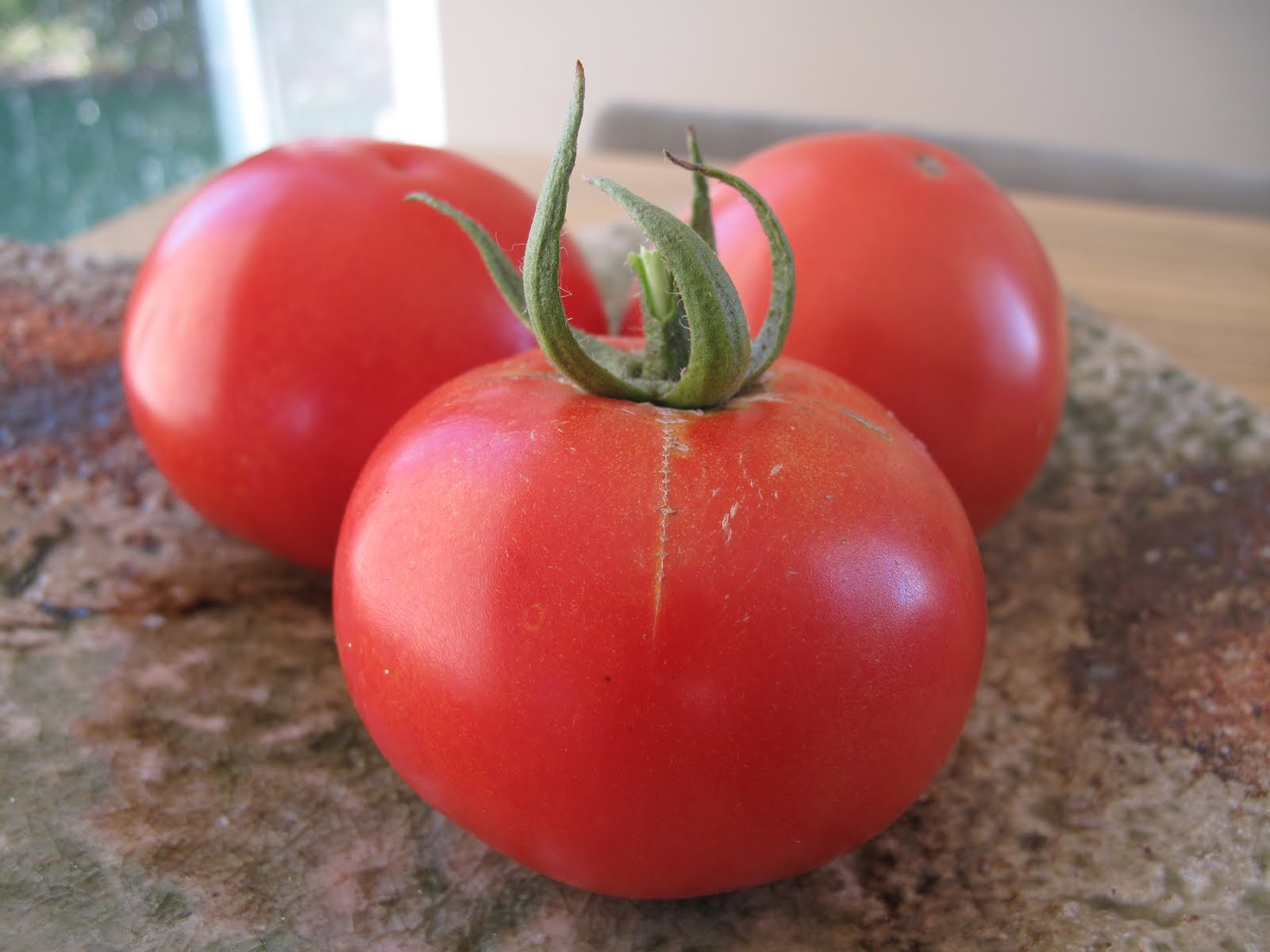
These are not the best tomatoes that I have ever grown. They're not the biggest, reddest, or sweetest. Nor are they the most flavoursome. They are, however, the tomatoes that have given me the greatest satisfaction.

These are the first tomatoes that I've picked from our Kitchen Garden since the January floods. Grown on bushes replanted by friends in the first terrible week after the destruction of our home and garden, they now allow me to say once more, "I have a kitchen garden," instead of, "I used to have a kitchen garden."

There are so many things to which I now must say, "I used to have..."

:: I used to have a beautiful home.
:: I used to have a collection of Asian textiles.
:: I used to have beautiful Japanese antique furniture.
:: I used to have a lovely garden filled with flowers and trees.

Before the floods we lived in a home that we had lovingly restored and decorated. We had it just as we liked it - warm, comforting and peaceful. We had book-lined walls, soft, welcoming sofas and carefully selected Asian antique furniture. Our collection of textiles covered beds, sofas and chairs. Piles of woolen blankets were available for snuggling into before the open fire, where we toasted marshmallows and sourdough toast, which we ate dripping with butter and Vegemite. Our life was pretty good.

We loved entertaining. We had a great guest bedroom, and we really enjoyed having friends to stay and making them feel special. We would lounge around on deckchairs by our swimming pool reading books and talking and eating and drinking champagne. We would eat Thai curries and talk until late into the night. I liked that.

We spent our holidays overseas. Japan was our favourite destination, and we spent much of our time purchasing the finishing touches for our home. Japanese pottery, lacquer and textiles. Tableware and soft furnishings. That and eating. We always chose our destinations for their cuisine and aesthetics. Shallow, maybe, but true.

I used to have a life like that. I used to love that life.

It is now fourteen weeks since the flood. People have begin asking us if life is back to normal, of our home looks different with 'all the new furniture'. They ask us how work is going. They clearly have no idea.

So what is our life like post flood? How can I explain to them? How can I explain to you?

First, the house. Before you read any further, take a look around the room that you're sitting in right now. Imagine your own home. Now, imagine that anything that is in the bottom foot or so has been damaged or destroyed. What has gone? What has been destroyed? What would you replace, and what is irreplacable?

In our case, the list of damaged or destroyed includes the following:

:: Kitchen, bathroom and laundry cabinets
:: Fridge, dishwasher, washing machine and dryer
:: Tables, chairs, sofas, chairs, coffee tables, cupboards and bookshelves
:: Beds, bedside tables, wardrobes (including all of the fittings in our walk-in-robe)
:: Rugs and fitted carpets and our wooden kitchen floor
:: Laundry and bathroom tiles are cracked and lifting
:: Skirting boards and the bottom foot or so of all the walls
:: The surface of all wooden furniture
:: Most of our photographs, seven filing cabinets of personal memorabilia
:: Most of my textiles
:: Most of Jemimah's toys - dolls clothes, barbie dolls and all the dress-ups

Now imagine how you would go about replacing it. Bear in mind that there is no insurance money, and you still have a mortgage. And then factor in 11 weeks with no income. Where would you start? Think of the plastering, the warped walls, the damaged cabinetry, the floors.

Now think of the holes in the walls letting in locusts, spiders and mice. Don't forget the moulds and the damp and the slugs. Think of the floors all going mouldy each week or so and having to completely clear the room to mop it and cover it with layers of bleach. Imagine the smells. Consider the health hazard.

Now ask us if life is back to normal. Of course it is not!! We have borrowed beds, and Ikea bedside tables instead of our lovingly collected originals. We have donated rugs on marine plywood or rough concrete floors. Our guest room is filled with boxes, only we have to move them each week, or the mould begins to grow.

Sometimes I wonder who I am. I go shopping and pick up the sort of things I was looking at 'BF' - 'Before the Floods'. Then I put them down again. What use is a new set of lovely orange linen table napkins when I don't have a table? Do I really need new sheets when I don't have a bed? What's the point in purchasing two hundred daffodil bulbs when there is nothing else to accompany them? Do I need a Japanese maru obi when I don't have a table to display it on?

I find myself gravitating to magazines like English Country Living, with its cozy comfy traditional English decor instead of the sparse Japanese style magazines I've always prefered, simply, I think, because I need comfort and warmth and security. I find myself crocheting and knitting for the same reason. I find our diets have changed. We are eating more processed foods - white bread instead of sourdoughs and grains; cornflakes instead of homemade muesli, stews and pastas instead of stirfries and grills. Pies, crumbles and puddings. Once again, I can only guess that it is the need for comfort, for familiarity, for warmth.

Our friends planted thirteen tomato bushes in our kitchen garden after the floods, but only two have fruited. February is really a little late for toms in our Central Victorian climate. When the tomatoes began to grow I thought that they wouldn't redden up, but I was wrong. These three are only the beginning - more are on their way. They give me great satisfaction. Once more I can boast that our kitchen garden is producing rocket and coriander and silverbeet and lettuces and cucumbers and tomatoes. Every day I pick leaves of our own plants for salads.

Now I can pick tomatoes again. That feels better than you can ever imagine. It feels normal. And it makes me feel like me. Just for a little while, life is good.

I have a kitchen garden.

5 Movies for Anzac Day

1. Gallipoli


2. The Lighthorsemen


3. Breaker Morant


4. Anzac Miniseries


5. Forty Thousand Horsemen


Lest We Forget

22 Apr 2011

Good things to do

It is Easter. Hurrah!! Five whole days with nothing to do but good stuff!! Eat. Read. Sleep. Laugh. Good stuff.

Here's a sampler of what we'll be doing. What about you?

Reading

I'm reading Major Pettigrew's Last Stand by Helen Simonson. My good friend, Hopewell Mom tells me that if you liked As Time Goes By, which I did, or The Guernsey Literary and Potato Peel Pie Society, which I definitely did, or Shadowlands, which I really enjoyed, or 84, Charing Cross Road, which I loved, then you should definitely give the Major and Mrs Ali a try. So I am.

Also on my reading list, to satisfy the curiosity of Richele, who tried to identify the titles from a photo earlier in the week, is Rose Tremain's The Road Home, Faulks on Fiction by Sebastian Faulks, of course, and the latest edition of Kateigaho magazine. G K Chesterton's The Wisdom of Father Brown and The Reformed Faith by Loraine Boettner are on my Kindle.

Hubby is reading Patricia Cornwell's Scarpetta, and some boring stuff for work. He's also trying to catch up on his Bible reading. He's using the Discipleship Journal Bible Reading Plan this year.

Jemimah is reading Lucy Boston's The Castle of Yew. Our current bedtime read aloud is The Magician's Nephew by C S Lewis. This is a terrific book for reading aloud, because Lewis always ends each chapter on a real cliff hanger. "Awwww...You can't stop there!!!"

Making

I'm still working on my Grannie Stripe Cushion. I tried to take a photo to show you yesterday, but the camera battery was flat. Typical. Soon, I promise. Jemimah is working on Bennett Blanket.

Listening

To the incredibly haunting voice of Geoffrey Gurrumul Yunupingu on his new album, Rrakala.

Eating

We've been munching on those cute little speckledy candy coated chocolate Easter eggs all week. They're too good to save for only one day a year, and besides, you need to get in some chocolate eating practice before the big day, don't you? Hot Cross Buns for brekky this morning, Anzac bikkies throughout the day, and plenty of chocolate on Sunday. As you do. Yum. I love Easter!!!!!

Laughing

Thai food with my best friend, Kerrie, last night. A barbie with NWBingham and his gorgeous family tomorrow night, and dinner with Mr and Mrs Adept on Sunday. Hoping to catch up with Jeana Marie on Sunday as well. Sarah and Jen are in Melbourne as well this weekend. Wouldn't some time spent with them make the hols just perfect? Far from making me more cloistral, confined, hermetic, hidden, insulated and reclusive, blogging has enriched my social life in a myriad of ways. Love you, bloggy pals.

Remembering

Those who died that we might live in peace. We'll be heading to the Dawn Service at the Shrine on Monday. Will you remember them too? Lest we forget.

Sleeping

Doesn't sound like I'm going to have much time for this, does it? So far, so good though. Five days is really quite a long time for fitting good things into, you know.

Happy Easter, dear friends. Are you doing any good stuff over the break?

20 Apr 2011

Australian literature exam narration

Jemimah's best narration from today's exams. Are you sick of these yet? I hope not.

Today, read her retelling of part of this Australian Children's Classic and tell me you don't want to know what happens next!!
Frank Dalby Davison’s Children of the Dark People has been described as “a European fantasy with pseudo-Aboriginal content”. Do you agree? Retell a part of the story that demonstrates this.

The whole idea of the caves, a magical spirit who has a tinkling dress and a whole load of beautiful caves is just impossible. Plus, if you ever read the book, there are many more spirits than just spirits who wear beautiful tinkling dresses. This is just a fairy story. I’ll tell it to you:

Nimmitybelle and Jackadgery had been captured by the witchdoctor, and the witchdoctor had put them at the back of the cave that he was hiding in. Every time he turned around, he glared at them angrily, as if they had done something wrong and he was paying them back.

They were just about to give themselves up as lost when they heard a little whisper, and when they turned, there was a little girl about the age of Nimmitybelle beckoning them. They were not tied up, so they quietly crept towards her. She motioned to them not to speak and then she showed them a little hole in the rock that they had not noticed before. They found themselves creeping through a narrow tunnel, just big enough for an average sized man. When they came out of the tunnel they were dazzled by a great light. When they got used to the light, they noticed that it was not the sort of light they would expect. It wasn’t light-bulb-light or sun-light or moon-light. When their eyes got more accustomed to it, they found that it was beautiful, shimmering, crystal light. There were thousands and hundreds of beautiful crystals. Nimmitybelle was the first to notice that the girl was wearing a beautiful dress, strung with crystals, just like beads. “Oh,” said Nimmitybelle, “it is beautiful!” The girl said, “I would give you one, but it belongs to the cave, for the crystals live here. I am merely borrowing them.” Then she said, “My name is the Spirit of the Caves.” Nimmitybelle and Jackadgery were still whispering for fear of the witchdoctor hearing. “No need to whisper,” she said. “Many people have come into that cave, and I have sung my little song, and they have not heard me. There is no need for him to hear me now.” Just then they heard a frightful yell of anger and shock from the witchdoctor, who really was just next door. Nimmitybelle jumped back in terror, and Jackadgery jumped in front of her. “Don’t worry,” said the Spirit of the Caves, “he has just found out you have disappeared. He is probably wondering how on earth you could have got out that cave entrance without him spotting you. Aha! He’ll never find our little cave!”

Then the Spirit of the Caves had, what, she thought, was a wonderful idea. “Let’s go take a look,” she said. Nimmitybelle thought this was the terriblest idea she could think of. She thought that they would merely be giving themselves away. The Spirit of the Caves obviously saw how she felt and said, “Don’t worry, if he hasn’t found the cave now, he could be standing right in front of it and won’t even see it. I rolled a stone in front of it.” Then Nimmitybelle and Jackadgery decided it would be okay. The Spirit of the Caves went first; Jackadgery second; and lastly, Nimmitybelle. In single file they crept down the tunnel once more.

This time, Nimmitybelle was nowhere near as frightened as she was before. The Spirit of the Caves rolled that stone back a tiny crack, and they all peeked through it. Nimmitybelle and Jackadgery were quite frightened when they saw the witchdoctor. What was he doing? He was merely jumping up and down, waving his arms as if he were trying to fly, yelling as if he had sat on an arrow, and stamping his feet as if he were trying to put out a fire. That’s what! To top it off, he was running around the room as if a load of bees were following him! Nimmitybelle was quite sure that any minute now he would discover them. Then she and the Spirit of the Caves and Jackadgery would all be doomed.

Finally the Spirit of the Caves had had enough fun. She suddenly became very serious, and said, “Come with me. You must be very hungry.” And indeed now that she had mentioned it, Nimmitybelle and Jackadgery realised just how hungry they really were. They crept back through the tunnel for the third time, and the Spirit of the Caves said, “Here, I will take you to my room. You may tell me your adventures and eat at the same time.” So she took them into her room, of which Nimmitybelle afterwards always said that if you take the most beautiful thing you could ever imagine and then you triple it, it would be ten times more beautiful. And that’s how beautiful her cave was. So they told the Spirit of the Caves their journey, and as they finished their food they also finished their story.

Then Jackadgery said, “I should like to go now to get a head start on the witchdoctor, for he is in a fine temper, and I am sure that if I came across him again he wouldn’t be too sorry to have a little fight with me.” Then the Spirit of the Caves rightly pointed out, “Shouldn’t you like to make some arrows first?” Jackadgery agreed, and while he made his spears, Nimmitybelle asked the Spirit of the Caves if she could have a look at her crystal skirts. The Spirit agreed, and even let her wear one while she waited.

Jackadgery finally finished his spears and before he went he asked, “May I paint a picture on your walls?” The Spirit of the Caves said, “Are you good?” Jackadgery did not need to answer. Before he could say, “By golly, yes,” Nimmitybelle sprang to her feet and said, “Jackadgery is the finest boy at painting on walls that I know of!” “Very well then,” said the Spirit of the Caves, “It is settled. You can paint a picture of your adventures until now.” While the Spirit of the Caves showed Nimmitybelle her other caves, Jackadgery painted the walls. When the Spirit finished her tour, she came back and saw Jackadgery with a satisfied look on his face and dusting his hands. “You are a fine painter, my boy,” she said, “quite fine.”

Nimmitybelle and Jackadgery thanked her very much for taking care of them, and said that they must be on their way, but Nimmitybelle said, “If we cannot find our way home, may we come back to you - at least for the night?” “Of course,” said the Spirit of the Caves. So Nimmitybelle picked up her dillybag and put her possum in it and Jackadgery picked up his newly made spears and boomerang.

With a final farewell and a wave of the hands, they left.

The Ripper Ripple Rug Reveal

Okay, okay, so I like alliteration. Too much probably. It is rather silly, I know.

It is the excitement, you see. The fantastically fluttering feeling that I have when I get to show off my latest completed project, is creeping into my writing. Which is okay, I think. Silly, but okay.

Anyhow, to the task at hand, and without further ado, here she is in all her rippling goodness. Ripple. I started her back in October. You can read about that here. She was finished at the start of March. So Ripple will, of course, always remind me of the floods. Maybe she even kept me sane. We'll, not quite sane, but less crazy that I would otherwise be. She didn't even get wet. Strange that.

She is made out of Grannie scraps, is Ripple, only then I had to purchase a few balls of colour to stop her looking dully boring. Wabi sabi murky is good, but washed out leftover grey is not.

At 130cm wide by 195 cm long (just over 4' x 6') she is the perfect size for our bed, which is where she is living. You can find out details of the Noro wool I used here, and I used Lucy's pattern from here. Apart from that incredibly long foundation chain, she was quite easy, and rather therapeutic with all that ripply deliciousness. The first row almost brought me to tears though. I think I redid it three times before I managed to get it right. But you forget that agony. Eventually.

I'm currently working on a Grannie Stripe Cushion. Nice and small. I've had enough of rug sized projects for a while. Especially since Jemimah and I are halfway through a knitted blanket called Bennett. Bennett Blanket. I really like knitting, but it is so slow compared to crochet, and our project is so big. Fun, but slow. I'll show you these shortly.

But now, back to Ripple. Do tell me how wonderful she is. I am so modest, yes I am. But she is a ripper, isn't she?

19 Apr 2011

A literature narration

Jemimah's exam narration from Thomas Bullfinch's The Age of Fable:
Jupiter, or Jove, the father of the gods, was married to Juno, the queen of the gods. Juno was often jealous of rival affection towards her husband. Tell of two examples of her severity toward her rivals.

There was the time when Jupiter was dating a human, not a god. She was called Io. It was especially bad because he was already married. He had sent a large cloud over the sky so that no-one would see him, since he knew he was being naughty. Juno, noticing the cloud immediately suspected, and with her magic, wafted it away, leaving the two lovers exposed. But Juno had already seen what was happening.

Jupiter, thinking he would have time, turned the girl into a cow! But Juno had caught a glimpse of her and she decided to pretend she did not notice. He thought it was all going very well until she came up to him and said, “Why that is a lovely cow you have there. You must have caught it. May I have it?” Jupiter now had a problem. If he said no, his wife would either get angry or he would arouse suspicion. But if he said yes, his wife would surely do something to the maiden inside the cow. He had no choice but to give it to his wife, so he did so.

Immediately, Juno took the cow and took her to the god with a thousand eyes and told him to keep his eyes on the cow. If anything suspicious were to happen, he was to call Juno and let her know immediately. He did so, and Jupiter had no chance of getting his maiden back or of changing her back into a girl. He was very alarmed at this and so he called on the god of music, Pan, and told him his situation. Pan immediately got to work, trying to put the god to sleep. This worked, however the god only slept with two of his eyes at a time. He kept on working and decided he would tell him the story of the gods in his music. Finally, Pan looked up and saw all his eyes closed. He wasted no time. As quickly as he could he got up and freed the cow. The cow ran to her father and wrote in the sand her name, Io. Her father was greatly grieved at finding his daughter was now a cow. He said, “I would rather have you gone forever than to have you like this.”

One day she was so sad because her father was sad that Io ran away. She ran over the largest things and the smallest things you can imagine. She climbed Mount Everest. She swam the seven seas and she walked many deserts. Finally, Jupiter found her and turned her back into a human.

The second occasion Juno was jealous was when Jupiter dated another girl called Callisto. This is the story.

Jupiter obviously didn’t learn quickly. Before you could recollect exactly what happened, he was dating another girl. This time Juno changed her into a bear! Jupiter and Callisto were very sad because you could see the hair growing on her arms, and her face slowly turning into a bear’s.

Though the girl was a bear, she forgot she was a bear. She was afraid of the woods, and afraid of her own kind. Often she would creep into the outskirts of town, just to be near her father and son. Once, her son was preparing to shoot a deer, when he caught a glimpse of her. He was afraid, though she made no signs of harming him. Seeing what was going to happen, she fell down on what used to be her hands and knees, but her son was terrified, thinking the bear was going to kill him. So he quickly grabbed an arrow and fitted it in place. But Jupiter, seeing what was going to happen, didn’t want it to happen. He didn’t want either of them to win – or die. So he quickly took hold of both of them and stuck them in the sky amongst the stars.

Juno, seeing the two of them given a place of honour, was so angry she probably screamed (but we don’t know that). She rushed over to some of the other gods and complained. She explained that she had sent Callisto into the woods because she was being dishonoured. The god of the sea didn’t fix this, though he did make sure that they didn’t fall down into the sea. And, if you were to look out at the sky and there weren’t any clouds, and if it were dark enough to see the stars, even in the day time, though some of the stars will not be there, or may have changed places like the bear and the boy, you will never quite see them disappear below the horizon.

The Language of a Red Rose

The Language of Flowers

In Eastern lands they talk in flow'rs
And they tell in a garland their loves and cares;
Each blossom that blooms in their garden bowr's,
On its leaves a mystic language bears.

The rose is a sign of joy and love,
Young blushing love in its earliest dawn, And the mildness that suits the gentle dove,
From the myrtle's snowy flow'rs is drawn.

Innocence gleams in the lily's bell,
Pure as the heart in its native heaven.
Fame's bright star and glory's swell
By the glossy leaf of the bay are given.

The silent, soft and humble heart,
In the violet's hidden sweetness breathes,
And the tender soul that cannot part,
In a twine of evergreen fondly wreathes.

The cypress that daily shades the grave,
Is sorrow that moans her bitter lot,
And faith that a thousand ills can brave,
Speaks in thy blue leaves "forget-me-not".

Then gather a wreath from the garden bowers,
And tell the wish of thy heart in flowers.

James Gates Percival
I've spoken to you many times about the pleasure I gain from gathering fragrant tussie mussies to dot around the rooms of our peaceful home.

Following the flood they've been composed mainly of roses, since most of our garden didn't like having its feet wet, but since the roses have thrived with the extra water they received, this has not reduced the satisfaction I have each time I catch the scent of one of these little nosegays as I go about my day.

If you'll wander with me around the rooms of our home this fine autumn Monday, this is what you will find:

Abraham Darby in a little Doulton Violet Vase that once belonged to Jemimah's Great Grandad sitting near we do school each day.

A funny little Mme Isaac Pereire, misshapen, but still with its characteristic deep fragrance scenting the spot where we knit.

A little coronation vase of Pierre de Ronsard on the coffee table.

A little bunch of tight rosebuds in an antique ink-bottle on the sink. Mostly they will open...

There is another little vase too, next to my husband's bedside.

To me this is the most important vase in our home, because in it for the whole of the rose season from spring to late autumn I try to keep a single red rose in the narrow red bud vase.

Long stemmed red roses are overdone, I hear you say, but this perpetual flower is a little secret message to my wonderful husband to let him know that I care for him, I appreciate what he does for us, and I love him very much.

In the Language of Flowers, red roses mean love, respect, unity, desire and love. I don't know about you, but I fail often to express these sentiments to my Beloved in words. Real life interferes too often - we talk about the mundane and the important, but rarely the romantic.

I'm really good at taking him to task about being late home in the evenings. I constantly hassle him about disciplining Jemimah too strongly, I...well...that's mostly all I harp on about...but I do it a lot. I'm not so good at telling him that he's an awesome husband, a terrific dad, a great provider and a wonderful friend.

At least my rock of a husband is reminded in a little way that I love him when he sees a fresh rose on his bedside each week. I know that, because even after so many years he still remembers to say thank you. Nice, isn't it?

Messages of love to your husband can never be overdone really now, can they?

18 Apr 2011

Poplicola - an exam narration

We're doing exams this week in the lead up to Easter and the holidays. I love exam week, but I am really looking forward to these holidays, to be honest. It has been a long and difficult term.

Our first subject, this morning, was Citizenship, where we have been studying Plutarch's Life of Poplicola. This is Jemimah's first term of this challenging book, and here is her uncorrected narration. I am really pleased with it...even though some of the facts are a little dodgy...it was Marcus, Poplicola's brother, who was honoured with the outward opening front door!!


Solon describes “the virtue and gallant disposition of the Romans”, of which Poplicola could be taken as a prime example. What are some synonyms for ‘gallant’? How do ‘gallant’ and ‘magnanimous’ fit the picture Plutarch has given us of Poplicola?

Poplicola wasn’t selfish. He shared. When his brother took away his consulship for a short time he actually helped him instead of trying to get it back.

When he was making alliances with different people, to be sure that he was going to do it, he sent some of the people’s children to be slaves to the other country. Among them he sent his daughter, which I think means that, “If my people have to do it, I have to”. When his daughter came back, he sent her straight back again.

The people showed him how much they liked him because normal people’s doors opened inward, so that passers-by would not get hit in the face! But Poplicola’s house had opening out doors.

Gallant means brave. Whenever Poplicola had to fight in an army he would not pass the job onto someone else. He went willingly, even though he could have died. He was willing to give up his life because other men had to do so too.

Magnanimous means not being sad when you give small things to someone else; willing to share; and glad to help. Poplicola was very much these characters. He was glad to help in any way. Most rich men and nobles were scornful of the idea of being with poor people. But not Poplicola. He was happy to share his home with others, and his home was always open to the poor and needy. He would always listen to the peoples’ needs, and patiently try to fix their problems. In one of the stories, Poplicola was told by a servant that he was being sabotaged and was going to be murdered. Poplicola instead of sending him out to get more information, kept him safe by not letting him out of his house (or castle) until he had sorted things out.

Poplicola was very fancy and rich, but as soon as someone needed help he would generously give them of his wealth.

Poplicola didn’t get jealous. On one occasions, he was at war when his brother was selected to take his place. Poplicola helped him but he could have been very angry if he chose to. Another time, Poplicola was at war and his men were building a temple. They had finished it before he got back, and Horatio was chosen to open it and to be coin holder. Then Marcus, Poplicola’s brother, shouted at him from the door, “O Horatio, your son lies dead in the camp.” Then Horatio said, “Mourn for him if you will. I am no mourner!” And he carried out the ceremony. But no-one knows exactly whether he saw through the trick or decided that he would not be sad in the ceremony.

Poplicola’s character was brave, kind, peaceful, and enduring. If he had been a Christian, he would have gone down in history for his bravery and kindness. He was very honourable. No wonder everyone would want to be him.

12 Apr 2011

Top Ten Christian Movies? Ummm

So I thought it would be easy to write a list of the ten top Christian movies - that is, films about an overtly Christian character, or with an obviously Christian storyline. But it is not. It is not easy at all. Not in the least. Anyhow, this is where I'm at:
  1. Amazing Grace


  2. Luther


  3. Chariots of Fire


  4. Chronicles of Narnia: The Lion, The Witch and The Wardrobe


  5. The Hiding Place


  6. The Cross and the Switchblade (only it is more than 30 years since I last saw this film. It may be terrible now...)


So what would you put in the other four spots? And why?

  1. Fireproof (with its dreadful acting)?

  2. The Other Side of Heaven? (but the Missionary is a Mormon, for goodness sake)?

  3. The Mission (about the Jesuits in South America)?

  4. The Passion of Christ (What do those of you who have seen it think of this film?)

  5. Babette's Feast?

  6. Ben Hur?

  7. Dead Man Walking?

  8. Shadowlands?

  9. Faith like Potatoes?
Please do tell me what you think!! I reckon this could be really interesting, if you all get involved. Go on then!! Have your say!

11 Apr 2011

Preparing for ANZAC Day

ANZAC Day has kinda snuck up on me this year, hitching a ride, as it does, on Easter's coat-tails.

It was with somewhat of a start that I realised this past weekend that we had only two weeks left to prepare for this important memorial day before Autumn holidays. It is now or never - do or die, as they say.

We decided to do, and not die. A sensible decision, one must agree. So with little thought or planning, this is what we're doing in our Peaceful Home to prepare for ANZAC Day on April 25th:

Firstly, on the weekend we took ourselves as a family along to the Geelong Art Gallery's exhibition of Aussie Artist, Sidney Nolan's, Gallipoli Series.

Jemimah and I have some affection for this artist after studying his works in AO3, and this series of pictures depicting as a theme that campaign that cost so many young Australian lives was an ideal entree into our commemoration of ANZAC Day for this year.

Back at home, we began this morning reading the first few chapters of this year's read-aloud. It's Soldier Boy by Anthony Hill, the true story of Jim Martin, Australia's youngest ANZAC.

At just 14 years 9 months of age, and only four months after leaving Melbourne's shores, Jim would be numbered amongst the dead, just one of so many boys who died for their chance of action and adventure at 'the Front'. I'm not spoiling the book by telling you that either - readers learn of Jim's death on page 4 - because Soldier Boy isn't a book of what happened to Jim, but rather a story of how it happened. Perhaps by the end of the book we'll be able to form an idea of why it happened too, and hopefully then have a better idea of how to ensure that it never happens again.

After all, that is why we remember ANZAC Day, isn't it - not to glorify war, but to remember those brave young men who died for their brand new country of Australia so that we might live here in peace and harmony, and that war might never happen again. Soldier Boy is historically accurate, and sometimes the accuracy interferes a little with the story, making it better for older children and young adults, but Jemimah at 9, and her cousin, the Princess Pea, at almost 11 both think it is pretty good so far, and so we'll continue on with this book in coming days.

In addition to Soldier Boy, I'll be reading one of our much loved Picture Books each day. You'll find our list of recommended ANZAC Picture Books here. (This post no longer formats correctly for me, but I am looking at it on our antiquated laptop. Is it okay for you?)

I have one lovely new addition to the list of recommendations this year: Photographs in the Mud by Diane Wolfer, beautifully illustrated by Brian Harrison-Lever. This book tells the stories, side by side, of Aussie soldier Jim and Japanese soldier Hoshi, both sent to fight on New Guinea's notorious Kododa Trail. Though fighting on opposing sides, it doesn't take long for us to realise that these men's stories are both the same.

Then the two soldiers meet. And fight...

There is no romanticising of war in this story. I thoroughly recommend this one.

Next week we'll bake and eat ANZAC bikkies. You'll find our recipe for these delicious biscuits here. We'll watch The Lighthorsemen and remember my Grandpa with pride.

On the 25th, we'll attend a service, watch a parade and drink our ANZAC Day hot chocolate and eat some bikkies.

And we will remember them.

Will you?

Lest we forget.

3 Apr 2011

Inspired by the Saturday paper

This is the first weekend we've spent at home since the floods. I must say that it has been nice having some time to just relax and be a family.

I've read and delighted in Mirka Mora's marvellously eccentric autobiography, Wicked but Virtuous, knitted a few inches of my blanket, watched a video of Chitty Chitty Bang Bang with Jemimah, been ably wined and dined with friends, watched Shaun Tan's Oscar winning short film, The Lost Thing on telly, arranged little nosegays of lovely autumn roses by each bedside, worshipped morning and evening at our local church for the first time this year, listened to the wonderful French songs of Jacques Brel and just generally recuperated and recovered. I've even read a good percentage of The Saturday Age.

I can get amazingly excited by the Life&Style section of The Saturday Age most weekends, and this edition was particularly inspiring...

The Book

I'm inspired to read Sebastian Faulk's new book, Faulks on Fiction: The Secret Life of the Novel. As you probably know, I love literary criticism, provided it is not too erudite. According to The Age, this is a book "about lots of books a lot of people will have read, arranged under section headings. Heroes, Lovers, Snobs, Villains - what could be more user friendly?" Sounds like my kinda literary criticism!

There's a BBC series of the same name. Wonder if it's coming to Australia any time soon?

The Quilt

How can I have never have heard of the Rajah Quilt until this weekend? Apparently it was sewn back in 1841 by a group of convict women on their five month journey from England to Van Diemens Land on on board the ship Rajah. Hence its name. There is an inscription on the border that says:
TO THE LADIES
of the Convict ship committee

This quilt worked by the Convicts of the Ship Rajah during their voyage to Van Diemans Land is presented as a testimony of the gratitude with which they remember their exertions for their welfare while in England and during their passage and also as a proof that they have not neglected the Ladies kind admonitions of being industrious

June 1841
Oh, I would so love to see this quilt one day, but I'm happy even to know of its existence. Those of you in Canberra can see it at the National Museum until July 31. Jealous...

The hotel

Oh wouldn't it be just sublime to stay at Le Pavillon Des Lettres - Paris' first literary hotel! Imagine a hotel that pays homage to the known and hidden talents of both French and international literature. Oh my...

I would like to stay in the Hugo room, please. During the mornings I will lounge in the hotel library, where I will read my copy of The Hunchback of Notre-Dame, purchased, of course, from Shakespeare and Company. Later I will leaf through some lovely old second-hand books that I will have discovered amidst the tacky Eiffel Tower statues in the bouquinistres that line the banks of the Seine. Sounds just about the perfect holiday to me.

Care to join me? What room will you chose? What book will you read?

Have you been inspired by your reading of the paper this weekend?