31 Mar 2010

Our Study

So here it is for those who wanted to see it - the study. This is where we do school - when we're not in the garden on the deck or at the kitchen table or sitting together on a sofa somewhere. If we're not in any of those places then chances are you'll find us here. Except when we're not, of course.

This is what you see when you enter the room - the whole thing at a glance as it were. The chair closer to the camera is where I sit to read our read alouds. Sometimes Jemimah sits on the other chair, the one with the ikat tube sarong from Ngela in Flores on it, but mostly she sits on the floor at my feet or on my knee. I like that best. The glass table almost always has a cup of coffee on it, only it is holidays at the moment, so it is somewhere else - like the kitchen bench. Rest assured, it isn't far away... The Imari plate is a heirloom inherited from hubby's grandmother.

On the mantle piece you'll see a silver Miao headdress from South West China, still worn by young girls on festival days. To its right is a silk felted apron worn by the Miao in the Zhouxi area of Kaili county in Eastern Guizhou.

To the right of the door as you enter you'll see the black bookcase pictured above. The three black boxes from Ikea hold electrical gear and chargers. These shelves hold reference books - dictionaries and books about books - as well as easy books for Jemimah to read. My Donna Hay mags find a home on the bottom shelf, and my Mrs Beeton cookery book presides over all. As she should. The other pic is a close look at my desk. Should have hidden the electrical cords better, shouldn't I? Wry smile. You'll notice Santa brought the much coveted map...

On the desk you'll find Jemimah's school books for the current term neatly stored along the back, with photos, flowers and other mummy ephemera in front.

On the other side of the sideboard is Daddy's desk - a copy of mine. That's where the computer sits, but I don't think Daddy would thank me for displaying it to the world! The iPod is here. Today it's playing Sojiro - 土の笛のアヴェ・マリア. You'll need to imagine that while you're reading. We always have music playing in this room, and otherwise you'll get a false idea. Mostly it is classical or world music or acapella metrical Psalms. Amongst the IT gear stored on his desk you'll find a lovely Caithness Glass paperweight and an antique Japanese calligraphy brush that he uses for cleaning the computer screen. Otherwise this desk is fairly utilitarian, really.

The chest under the window also comes from hubby's grandmother. Inside you'll find old Bible Study materials mainly. The books at left are a series of Time Life books called Myth and Mankind. They're pretty good.

We use the top of the chest to display interesting things. At the moment that includes a flowers from our autumn garden, a recently framed tapestry completed by Jemimah, our parala game board and an antique Japanese box drawer containing Japanese incense sticks. The white thing is a whale vertebrae. Yes, a real one. We found it washed up on a Yemeni beach and carried it home.

The other wall - the one to the left of the door is taken up by the bookcases that I showed you recently and haven't bothered to include again. You can view these here if you want. They take up the entire wall, except the bit behind the door. It is a cut-out floor to ceiling window bit that allows light into the room. It looks like this:

It is a bit washed out, but it's a beautiful sunny day today, which made it a bit hard taking a pic of a window. Probably there's a better way of doing it, but I don't know what it is. Anyhow, in this photo you see the games chest containing marbles, card games, jigsaws, knuckle-bones and other interesting little games for rainy days. The light looks fantastic at night, because you can see it from much of the house. Through the window is the link where you can see our Go game board, and beyond that the pool. That's our view, and we love it!!

And that's our tour finished. I hope you enjoyed it. I always like knowing where people are when I read about their day-to-day lives. I'd love it if you'd post pictures of your school room, and I hope you have enjoyed having a bit of a look around ours. Oh, if you click on the photos you should be able to see them bigger if you want to see even more!

Have a safe, healthy and happy Easter break everybody. we'll be back next week!

Some great Aussie books


My goodness, I think I absolutely totally and completely NEED all three of these books.

Don't you?

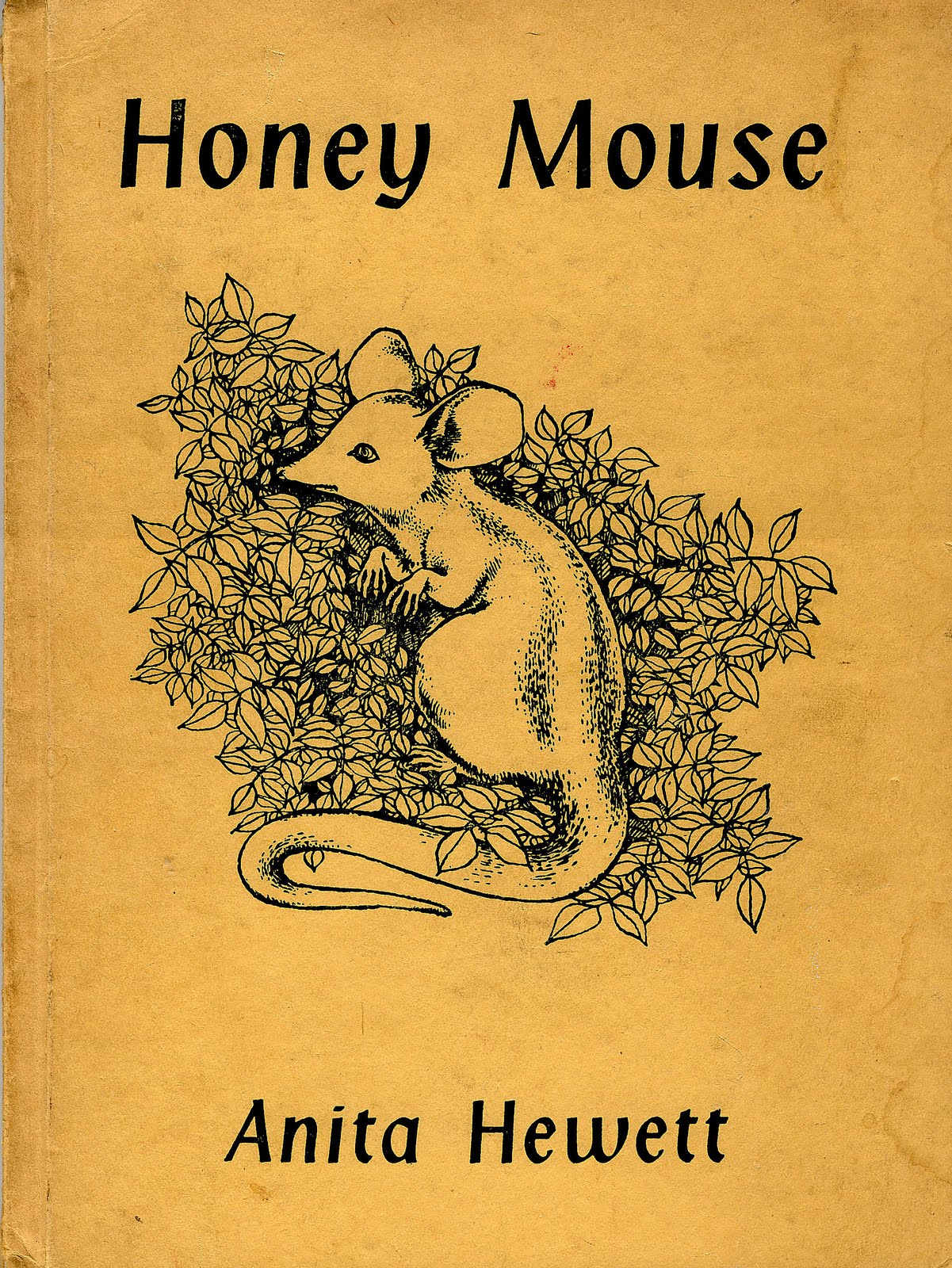
Honey Mouse

It seems the reviewers don't quite agree over Honey Mouse. In A History of Australian Children's Literature (1971), the doyen of Aussie lit commentators, Maurice Saxby wrote:
Originally written for English children this is a pleasant production with sepia drawings by Margery Gill, useful for story hours, and of interest also to the younger reader because of its brief texts.
The writers of The Oxford Companion to Australian Children's Literature(1993), Stella Lees and Pam Macintyre, on the other hand rather denigrate the book. Read what they have to say:
Not all animal stories represent animal life so well. Inaccuracies abound... This poor example of the depiction of Australian animals perpetrates such inaccuracies as 'koala bears'. In Anita Hewett's Honey Mouse and Other stories (1957), which contains ten stories about Australian birds and animals, the animals are humanised, dressed, and the settings inaccurate. Koalas are again referred to as bears, and in the same natural environment the reader finds koalas, cassowaries, turtles, bats, dingoes and pythons.
Goodness, girls! Is it really that bad? Come on - it was written back in 1957. By an English woman. When I was growing up a decade later we called them koala bears as well. Everyone did back in the 'olden days'. Overseas they still do.

Honey Mouse is not a natural history book. It is a pleasant little animal fantasy useful for story hours and for newly fluent readers to read alone. Just like Mr Saxby said. While they're reading our kids will pick up lots of incidental knowledge about our Australian birds and animals. They'll be reminded that brolgas dance; that male cassowaries look after their eggs in nests on the ground, while the brush turkey hides hers in a big mound, and the platypus in a platypussary; that lyre birds are mimics; that jabiru stork eats fish; and that kookaburras laugh at misfortune. As if an Aussie kid didn't already know that bit:
"Kookaburra laughs," they said. "He laughs when he's happy and he laughs when he's sad. We hope he will always laugh. We like it."
There are no clothed animals, but they do talk. So what? Similarly, there are inaccuracies in environment. This didn't matter to us, one whit, because I don't think that's what the book's written for. Since we read the book as a read aloud I did substitute 'koala' for the old fashioned inaccurate 'koala bear'. We also discussed the fact that Green Turtles are unlikely to be carrying koalas very far on their backs and in fact spend most of their time in the sea, returning to the beaches only to lay their eggs. Good opportunity for a science lesson thought I, ever the teaching mummy.

Anita Hewett knows what kids like to read about, and she does it very well. They are light little moralistic tales using characters from our Australian bush. We liked it.

I was interested to read here of Hewett's upbringing in a strict Baptist family by a father who was Deacon, organist and Sunday School Superintendent. Anita taught the baby class. Despite later rebelling against her religious upbringing, Christian morals shine brightly throughout the ten little stories contained in Honey Mouse. Kindness, perseverance and consideration contrast with pride, indecision and forgetfulness. Lots of character building material here if you want it.

Fun too - just what the kids want. And they, after all, are the intended audience of Honey Mouse - not erudite reviewers in ivory towers.

Lizard Comes Down from the North is your classic Chinese Whispers tale. In it, little green lizard decides to make a long, long journey...
..."Over bushland and sand and grassland and scrub." And he hopped in the air with a squeak of delight because he felt gay and brave and adventurous.

Then Lizard looked up against the sun, and far above him the black-feathered swan beat his wings in the air, and called: "Why are you coming down from the north, you strange little thing with a scaly back?"
Doesn't sound too scary here, does he? Wait until later in the story though, where Lizard meets his alter ego:

"It's a long, long journey I've made," he said. "Over bushland and sand and grassland and scrub."

He hopped in the air with a squeak of delight, because he felt happy and safe and friendly."

Then Lizard looked up...and...he saw the wall, and over the top of it, the faces of Bower Bird, Possum, Platypus, Turkey, and Wombat.

"And what are you doing, up there?" he asked.

The five faces stared at the little green lizard.

"We're hiding from the dragon," said Bower Bird.
"He's coming down from the north," said Possum.
"He'll eat us all up if he can," said Platypus.
"He has huge shining scales, and a great lashing tail, and he's crashing along to the forest," said Turkey.
"What a time we've had!" said Wombat.

Lizard's small scales shone green in the sun as he flicked his tiny tail in the air. Then he pattered behind the wall, and said:
"Please may I hide behind your wall? I'm not very fond of dragons myself."

Oh dear.

I suppose you could use this story as an illustration of facing your imaginary foes, but we just laughed and laughed. Just as Lizard does when he realised what has happened:
"Oh my, I'm a dragon, I am!" he said. "Oh ho! I'm a dragon. A great fierce dragon!"
Then Lizard flicked his tiny tale, and he rolled on the ground with his legs in the air, laughing and laughing and laughing.
Shame the reviewers didn't read Honey Mouse the same way - as a delightful little book for young children. You can use it for character development if you choose to. We didn't. You can use it for nature study with some discussion too. We didn't. Jemimah learned from it anyway. She learned from the author herself - not from me getting in the way and telling her what she should know. She certainly doesn't believe that koalas talk, or that wombats tie strings to their tales so they won't forget. She does know that brolgas dance and platypus live in platypussaries though. Did you?

She also knows not to believe everything she's told. Perhaps someone should tell the reviewers that kids are not so naïve as they fear.

30 Mar 2010

My first granny!

So you may have lost me, I fear.

Yesterday whilst tidying the disaster in the study I came across a crochet hook and wool in Jemimah's handwork drawer, and for some reason I felt the need to crochet a granny square.

Right. Sure.

Where did that urge come from, I ask you - certainly nowhere rational, sensible or practical.

Anyhow, yesterday instead of blogging or tidying or ironing or doing anything practical at all, I crocheted. For hours. On one little square. Which was NOT GOING TO BEAT ME!!!!!

And here it is. My very first granny square!

Now I'm obsessed. Totally. Actually, I suppose that technically that should read HOOKED!

I'm busily trying to work out how I can get some wool to take camping with us on Thursday. Only I don't think I can. And I don't want to do too many purple acrylic squares, really, do I?

It's all Pip Lincolne's fault. I used her book. That's it in the pics, and also her Granny Square School tutes on YouTube. You'll find the introductory Lesson 1 here. By the time you get to Lesson 10 you'll be joining squares like a pro. Which I'm not, because I'm only up to Lesson 8. But you will be, soon, if you join me. Best of all, the instructions actually work! Even for a left hander like me. My square may be wonky, but I don't think it is too bad for a first attempt.

So anyway, I gotta go. Something is calling, calling, calling.

If you never see me here again, blame Pip. Perhaps I can also use her as the reason for why the study is still a bomb site. Do you think hubby will accept that as a valid excuse?

29 Mar 2010

Oh dear...

We're generally pretty much 'neat-freaks' here at our Peaceful Home, and so surveying the chaos that is the remains of exam week, it is rather clear how I shall be spending the first day of hols...

...tidying the study.

I might even post some after pics if you'd like to see what the room where we do school usually looks like. Would you?

AO3 Term 1 exams

And here's this term's exam.

Just curious - do any of you make use of these exams? Should I keep posting them?

How many of them actually use the Our Curriculum tab at the top of my blog? Is there anything you'd like me to add to this page to make it more useful perhaps?

Please help me make this work for you!

Bible

1. Paul’s epistle to the church in Rome shows how Christ’s death makes us right with God and how he will help us live a good life. Can you explain some of the things Paul says in this letter?
2. You have studied Psalm 23 in depth this term. Tell me some of the ways you see Jesus in this Psalm. You may choose to do this line by line.
3. Tell about the end of Moses’ life.

Memory

1. Recite Ephesians 6: 10-18 about the Armour of God to Daddy.
2. Westminster Catechism questions. How many can you get right?
3. Récites Éphésiens 6:10-11 Les armes de Dieu,en français à Maman.
4. Recite your poem, The Tyger by William Blake.

Writing

1. Write the alphabet in joined running lower case letters in your very best writing.
Her writing is coming along well. See attached.
2. Please write your full name using your very best joined writing. Ensure your letters sit on the line, and watch slope and spacing.

Reading

1. Read for 5 minutes from Storm Boy (900L);Read for 5 minutes from Ballet Shoes (930L); Read for 5 minutes from A Wizard of Earthsea (1150L)

World History

1. Can you tell me something about the Renaissance and some of the artists who lived in that time?
2. Tell the story of Mary of Scotland – a most unhappy queen.
3. When the Polos entered Balashan they entered the western edge of a territory that lies east of India and runs eastward to the border of china. He found many strange animals and wild beasts. Tell me about this part of Marco Polo’s voyage. Can you show me the area on our new map?
4. Illustrate one of the following:

a. William Tyndale – translator of the English Bible
b. John Calvin – theologian of the reformation.

Church History

1. More than anything, Martin Luther wanted peace with God. His search led him to the Bible where he learned about salvation through faith. Tell me about this.

Natural History and General Science

1. Tell me all you know about one of the following:

a. James Watt and the invention of the steam engine
b. The invention of the electric engine and electric locomotive
c. The invention of spinning machines: the jenny, the water frame, and the mule.

2. Make me some popcorn and explain to me how it is made.
3. You have learned about a number of marvellous Australian animals this term. Draw a picture of one and tell me what you know of it.

Literature and Tales

1. “A man, sir,” said Helicanus, “who has not spoken to any one these three months, nor taken any sustenance, but just to prolong his grief; it would be tedious to repeat the whole ground of his distemper, but the main springs from the loss of a beloved daughter and a wife.” Lysimachus begged to see this afflicted prince, and when he beheld Pericles, he saw he had been once a goodly person, and he said to him, “Sir king, all hail, the gods preserve you, hail, royal sir!” But in vain Lysimachus spoke to him; Pericles made no answer, nor did he appear to perceive any stranger approached. And then Lysimachus bethought him of the peerless maid Marina, that haply with her sweet tongue she might win some answer from the silent prince: and with the consent of Helicanus he sent for Marina…

What happened next in this play? Here are some proper nouns you can use: Pericles, Cleon and Dionysia, Leonine, Lychorida, Mitylene, Lysimachus, Helicanus, Marina.

2. Tell the story of how Perseus came to the Aethiops and freed the fair maiden Andromeda from the sea-monster.
3. What has been your favourite part of Christiana’s Story so far? Tell me about it.
4. Explain how the Princess Irene was able to rescue Curdie from his prison under the mountain. 5. Tell the story of the Master of the Harvest who always grumbled about his crops and his poor sick wife who remained faithful.

Australian literature/history

1. Explain how Meg came to meet up with Alan Courtney in the paddocks where the bush grows thickly. Where were Aldith and Andrew?
2. Describe what happened when the Governor decided that for the privilege of mining Queen Victoria’s land and keeping the gold they kept, the miners should pay a licence fee of thirty shillings a month.

Mathematics

1. Complete review sheet 155 (Book 3b)

French
1. Listen to the French story and draw a cartoon strip to illustrate the tale:

Dans la salle à manger il y a une table et cinq chaises. Une, deux, trios, quatre, cinq. Sur la table il y a une nappe blanche. Sur la nappe blanche il y a des assiettes, des tasses, des fourchettes et des cuillières. Il y a cinq assiettes, cinq tasses, cinq fourchettes et cinq cuillères. Il est absolument défendu aux enfants de jouer dans la sale à manger!

Un jour Ninette entre dans la salle à manger. Elle voit la table avec sa nappe blanche. Elle dit: “Oh! Voilà une jolie petite maison! Oh je veux jouer à la maman.” Elle entre dans la petite maison. “Quelle jolie petite maison!” dit-elle. “Je suis la maman, et la poupée est ma petite fille. Oh, j’adore jouer à la maman.
“J’adore ma petite maison,” dit Ninette. “La table forme la toit, et la nappe forme les murs. Mais la nappe n’est pas assez longue. Les passants peuvent me voir!” Elle tire la nappe. Hélas!! Elle fait tombe les assiettes, les tasses, les fourchettes et les ciullières! Voila, une assiette et deux tasses cassées!
A ce moment Monsieur Coq entre dans la salle à manger. “Oh Ninette, Ninette,” dit-il, “que tu es vilaine! Voila une assiette casée…voila deux tasses cassées…Oh, tu es villaine, Ninette!” “Je te demande pardon, Papa, “ dit la pauvre petite Ninette. A ce moment Madame Poule entre dans la salle à manger. Elle voit une assiette et deux tasses cassèes. “Oh, Ninette, Ninette, “ dit-elle, “que tu es vilaine!”

2. Dessines: Trois assiettes, deux tasses et une fourchette. Ecrives les nomes à droite des images, s’il te plaît.

3. Complete these word matching games on the computer :

a. colours,
b. animals,
c. office tools.

Picture Study (Michelangelo)

1. What is the name of the artist we studied this term? What can you tell me about his life?
2. Describe your favourite picture/sculpture from this term's picture study and explain why you like it.
3. Can you draw one of his others?

Composer Study (Early Music)

1. In a break from our regular composer study we have been looking at early music. What can you tell me about music in Mediaeval times?
2. Tell me what you know about Hildegard von Bingen?

Music

1. Sing all the songs from this term in front of Daddy.
2. Play three songs on the recorder, including one that uses your new notes.

Handwork

1. Show Daddy your cross stitch and explain how you did it.
2. Do you know the names of the stitches you used?

AO2 Term 3 Exams

Sorry I am so late posting this exam from last year. Better late than never, though, I guess...

Bible

1. “Because you did not trust in me enough to honour me as holy in the sight of the Israelites, you will not bring this community into the land I give them.”

To whom did the LORD speak these words and why?

2. Can you tell me what happened when Jesus and his mother went to a wedding in Cana?
3. Tell how Satan tempted Jesus in the desert.

Memory

1. Recite John 14: 1-8 to Daddy.
2. Westminster Catechism questions. How many can you get right?
3. Récites Matthieu 19:14 en français à Maman.

Writing

1. Write the alphabet in upper and lower case letters in your very best writing.
2., Please write, using your very best writing: “The five boxing wizards jumped quickly!” Watch punctuation, slope and spacing.

Reading

1. Read for 5 minutes from Farmer Boy (820L)
2. Read for 5 minutes from The Mouse and the Motorcycle (860L)

World History

1. Can you tell me something about the three inventions that ended the Middle Ages?
2. Tell the story of Edward and Richard, the two little princes in the tower.
3. What happened at the end of Joan of Arc’s life?
4. Illustrate one of the following:

a. Elizabeth of Hungary, Servant of the Poor;
b. John Wyclif, The Morning Star of the Reformation; or
c. John Huss, Forerunner of the Reformation.

5. On Christopher Columbus’ forth and final voyage he was given four old and worm-eaten ships for his voyage to find a passage through the unknown continent he had found. Why was this so and what happened as a consequence?

Natural History and General Science

1. What was your favourite part of Pagoo? Tell me about it, paying particular attention to any other sea creatures he encountered.
2. What are some of the most amazing changes that Seabird encounters during his long live on the waves?
3. What can you tell me about magpies?

Literature and Tales

1. “Aegeon had no money to pay the fine, and the duke, before he pronounced the sentence of death upon him, desired him to relate the history of his life, and to tell for what cause he had ventured to come to the city of Ephesus, which it was death for any Syracusan merchant to enter."

What happened next?. Here are some proper nouns you can use: Aegon, Antipholus, Dromio, Adriana, Ephesus, Syracuse.

2. These three pictures illustrate a scene from Robin Hood. Can you tell me what happened in this episode in the life of Robin and his Merry Men?
3. Before Pilgrim and Hopeful could reach the Celestial City there was one last trial they had to face. What was it?
4. Tell the story of one of the following:

a. The two girls Kate and Undine in “Motes in the Sunbeam”;
b. Little Siegfried and the “Red Snow” on Mont Blanc; or
c. The Sea Creatures in “Wherunto?”

Australian literature/geography

1. Tell me about Narahdarn the bat who wanted honey.
2. Describe what happened when the puddin’ thieves made an appearance carrying a bran bag in their hands. Who was the rightful owner of the bag?

Mathematics

1. Complete review sheet 95 (Book 3b)
2. Recite your eight and seven times tables.

French

1. In the song Jean Petit qui danse several parts of his body dance. Name them in French and English..
2. Translate the following passage into English:

Monsieur Coq est très riche. Il a une jolie maison. Dans cette maison il y a une salle à manger. Le trois petites poulettes mangent dans la salle à manger. Ninette mange une pomme. Linette mange un orange et deux fraises, et Minette mange trois framboises.

Dans cette maison il y a aussi un salon. Les poulets dansent dans le salon. Les trois petites poulets aiment beaucoup danser!

3. Qu'est-ce que les trois poules manger?

Picture Study (Salvador Dali)

1. What is the name of the artist we studied this term? Where did he live?
2. Describe your favourite picture from this term's picture study and explain why you like it.
3. Can you draw one of his others?

Composer Study (Handel)

1. What is the name of the composer we have been studying this term? What can you tell me about his life?
2. Tell me what you know about his Music for the Royal Fireworks.

Music

1. Sing all the songs from this term in front of Daddy.
2. Play three songs on the recorder, including one that uses your new notes.

Handwork

1. Show Daddy your felt purse.
2. Do you know the names of the stitches you used?

26 Mar 2010

Five things I'm doing...


...this weekend.
  1. Seeing this here.

  2. Celebrating this with a candlelight dinner at home. What fun. Will you join us at 8:30 pm on Saturday? You can make a lantern like my one here!

  3. Reading this for bookclub.

  4. Visiting the hairdresser and the beautician. I am looking even more strange than usual with wild untamed hair and red eyelashes. Hopefully I'll get time to drop in here in between.

  5. Spending time here and here and here. I'll be where they are in about six weeks. Not that I'm counting or anything.
What are you up to?

Sunrise

I am the LORD, and there is no other;
apart from me there is no God.
I will strengthen you,
though you have not acknowledged me,
so that from the rising of the sun
to the place of its setting
men may know there is none besides me.
I am the LORD, and there is no other.

Isaiah 45: 5-6
The view from my bedroom window just now.

Just awesome.

25 Mar 2010

Calling Aussie Fairy Lovers


I think I would have liked the artist Ellis Rowan. Born in 1847, she failed to be constrained by the nineteenth century conventions placed upon young gentlewomen of her time.

Like me she had a bad attack of the wanderlust, using the cold winters at the home in Victoria's Mount Macedon, as an (entirely plausible) excuse for gallivanting throughout Australia and New Guinea, and even as far as the United States. Many of the places she visited were remote, and she was often the only, or one of a very few, white women in the area. And wherever she travelled she painted.

Perhaps it is Charlotte Mason's influence upon my current life, but I find myself nodding with approval at stories depicting her scrambling up rocks by clinging to vines as she searched for flowers on Murray Island, North Queensland, leaving her party behind in her wake. She held huge tarantulas in her hand before painting them. Ugh. She had a total fascination with natural objects, and constantly searched for more and more colourful and unusual objects to paint.

In her book A Flower Hunter in Queensland and New Zealand, she recounts the occasion when, while attempting to cross the Bloomfield River, south of Cooktown, she became trapped on a log by a rapidly rising tide. I dare say the crocodile circling her did not bring her much joy. She was finally rescued by Aborigines.

Oh yes, I would have liked Ellis Rowan very much indeed.

The National Library of Australia is home to more than 900 of Ellis Rowan's paintings, and in their new book, Fairy World, they have taken 11 of these and turned them into delightful fairy havens that introduce her floral depictions to a new generation of young Australians.

The YouTube video depicts the book in all its glory. On one side of the page is a description in rhyme about the plant on the other side. These include the Bumpy Satin Ash, the Pitcher Plant, the Red Flowering Gum and Sturt’s Desert Pea. Rowan's original paintings, have been altered to include a flap that can be raised to reveal a pretty fairy or cheeky elf hiding in the foliage. Cute. ‘Did you know’ fact boxes are also included about each of the plants.

I would love to do an artist study about Ellis Rowan for school. I may do just that, in fact, but until that time comes, I think this book is a super way to introduce my 8 year old fairy lover to the delights of this exquisite artist. Not that I think that the fairies add, mind you. Publishers nowadays fail to appreciate that a child could actually be interested in nature, flowers and art for their own sake. They seem to believe that an appreciation for our flora will never be acquired by mere observation, but rather has to be helped along by fairies and other methods designed by adults to awaken the child's otherwise deadened imagination. Yeah.

A child raised on a diet of living books, poetry, art and nature will enjoy this lovely book regardless of whether there are fairies hiding in the pictures or not. For the child that has not, the poetry and nature facts will probably fail to impress even with the distraction of the wee folk.

For me Ellis Rowan's pictures are enough. I will be purchasing this book for Jemimah as soon as the budget allows. I will also look for a copy of A Flower Hunter for me to read. In the mean time, I'll be getting my fix here in the Ellis Rowan pages of the National Library of Australia. Over 400 of her paintings have been digitised, and can be viewed on the Library’s Pictures Catalogue by entering the search term ‘Ellis Rowan’.

I can't believe I've not heard of her before. Have you?

24 Mar 2010

Perseus frees Andromeda

Perseus Rescuing Andromeda 1513, Piero di Cosimo

Tell the story of how Perseus came to the Aethiops and freed the fair maiden Andromeda from the sea-monster.

Perseus flew on until he came to the edge of the island. But when he tried to go further a sudden wind arose and stopped him from going. No matter how hard he tried he could not because the sandals were not strong enough. He called to the gods, “Would you desert me in a place like this when I have come so far? But there was no answer. Then he gave up trying. A few days later when the storm seemed to have died down he tried again. But the storm arose on him again. So he decided he would go south till the storm died down and he would try and go around it.

As he was going around the storm he saw something on a hill. He put on his invisible hat and got closer. To his surprise he found it was a fair maiden tied up by the hands to a rock. She had not seen him yet because of the invisible hat, but Perseus resolved to save her. So he whipped off his hat and the girl immediately saw him. But she did not seem happy about it. She said, “Do not come closer for you shall die, just as I am about to.” But Perseus was not afraid. In fact he said to her, “Do not worry, for I have the powers of the Immortals.” But instead of being happy she called for her mother. Perseus asked her, “Why call for your mother when she had left you in such a state as this?” But she did not answer. She told him that a dragon had captured her and that she was going to be eaten at sunrise. “If I devour this horrid dragon, will you marry me?” The girl nodded. Then he added, “And seal it with a kiss.” So she kissed him on the cheek.

Then she screamed. Perseus turned around and saw a horrible dragon coming towards them. Perseus immediately whipped on his invisible hat. The dragon was about to eat the girl when Perseus thrust his sword into the dragon’s flesh. The dragon jumped up in pain and Perseus whipped off his magical hat so the dragon could see him. It roared with rage and pain. The dragon went to grab hold of him, when Perseus opened up the leather bag and showed the dragon the Gorgon’s head. Immediately there was a long island of rock in the middle of the sea.

Perseus laughed and turned to the girl. He asked her, “What is your name, fair lady?” “Andromeda is my name,” she replied. Then he unbound Andromeda and he carried her to another island where they slept for the night.

When he was asleep Perseus had a dream. He dreamed that the spirits came back to him and said, “I will take the shoes and the hat and the sword for you will not need them. But you can keep the Gorgon’s head until you get back to your home for you will still need it. Then I will come back and take it and I will hang it on my shield as a symbol of you. Then he awoke. And thinking it was just a dream he looked to where the sword and the hat and the sandals had been, but they were not there. Then he looked to where the Gorgon’s head was. But it was still in his place. He chuckled to himself and then went back to bed.

A summary of Romans

We're doing exams again this week. I hope you enjoy reading some of Jemimah's answers!

I think she did particularly well with this one on Paul's letter to the Romans. Paul compresses such vast thoughts so succinctly that Romans can be difficult enough for adults let alone an 8 year old, and yet the truths contained in his letter are valuable for children and well as grown-ups.

Have a look at how she did:

Paul’s epistle to the church in Rome shows how Christ’s death makes us right with God and how he will help us live a good life. Can you explain some of the things Paul says in this letter?

Pauls says in his Letter to the Romans that you cannot be saved by your works, but by your thoughts and by the way you honour God. You can only be saved by believing that Christ died for you while you were still sinners to save you from death. God loved you so much that he sent Jesus to die because we could not save ourselves and now he will help us to do better so that we can go to heaven.

In the olden times, if you broke the Law you would not be allowed to go to heaven, but God knew how sinful we were, and he knew that we could not do it so he sent Jesus so that we could go to heaven without having to be perfect.

God is the boss of you and you must do what he commands you to do or you will be dishonouring God and displeasing him. There are three people who are bosses of your life: you, Satan and God. If you obey Satan nothing will go right and you will go to hell. If you obey yourself you will also go to hell. But if you obey Jesus everything will be good and you will be saved through Jesus Christ. But we always do the wrong thing as well. And this is why Jesus had to die on the cross as well, because we would go to hell because we cannot be good no matter how hard we try and no matter what you do.

Music of the Middle Ages


Hildegard of Bingen (German: Hildegard von Bingen; Latin: Hildegardis Bingensis; 1098 17 September 1179), also known as Blessed Hildegard and Saint Hildegard, was a German abbess, author, counselor, linguist, naturalist, scientist, philosopher, physician, herbalist, poet, visionary and composer. Elected a magistra by her fellow nuns in 1136, she founded the monasteries of Rupertsberg in 1150 and Eibingen in 1165. (From here)

Early music videos

Sometimes I use my blog to store stuff for school. This is one of those times - sorry.

Instead of studying a particular composer this term, we've been looking at early mediaeval music. Have a listen if you like!


22 Mar 2010

Talking of numbers

My maths teacher used to try and make the learning of multiplication tables into a competition. Each morning he would point to a random fact written on the blackboard, and we were to see how many of the following problems we could complete before he called 'time'.

The process did two things for me. Firstly it made me wonder why none of the other kids realised that all you needed to do was find where you'd written this answer most recently and then copy all the answers that followed straight into your maths book. Secondly it made me into an incredibly fast writer.

I invariably used to win maths drill - but I never learned my tables. To this day I skip-count my 7s and 8s instead of knowing the answers by heart, because despite spending 15 minutes every school-day doing exercises like the one I've just described, I couldn't see the reason for knowing this stuff and so I didn't bother to learn it.

Nowadays there are proponents for and against rote learning of maths facts. Relaxed types say that you'll learn them by using them. They're probably right. My 7s and 8s are better now that I'm teaching them to Jemimah then they've ever been before (and can I remind you that I did University maths?). More formalised classical educators say that rote learning works and committing stuff to memory works better when you're younger so why not begin teaching maths facts to your four year old? They're probably right as well. We've had lots of success with early rote memorisation in our homeschool.

So which group to follow? Either, neither or both?

This dichotomy is not new. Back in about 1945 an Adelaide man called John Flanagan wrote a little book called Numbers - A Book of Figures. The forward, written by senior lecturer at Adelaide Teachers college, H H Penny, MA, PhD, Dip Ed (Pr), Dip Ec (phew!!) says this:
There was a time (wholly gone?) when arithmetic was the grimmest of lessons. Many will remember the dolorous chanting of "tables" day in, day out. And despite the massive weight of repetitions 9x7 would sometimes be 56 and 7x0 still oftener be 7. To the teacher of the old school every such error was an incitement to more and yet more rote work. Later came the view that children should learn their number facts entirely by experiment and use. "Away with the dulling drone of rote drill," said the New Educators. "Soft pedagogy," was the retort of the Old School-ers.

Today? Today we can see the right and wrong of both points of view. In a nutshell it is, I believe, this: Each new step, be it only the adding of 2 and 2 should be a conquest and a delight, but certainly should follow on the heels of conquest. There are so many "new steps" in arithmetic; they can be safely taken only if the child stands firmly on all the steps he has already been asked to take.

This as I see it, is the purpose and justification of Numbers - to give the child a firm grip of the basic number facts. From the very nature of the material there can be little that is new in the book. Its merit lies in the ingenuity with which the old, old facts have been grouped and displayed and in the thoroughness with which the ground has been covered.
Seems to me that in the past 65 years nothing much has changed.

Which is probably why I've found John Flanagan's little book as valuable in Jemimah's homeschooling as HH Penny predicted that it would be for kids back in 1945. To Mr/s Penny, "the aim of Numbers (was) that the learning and testing... (be)... 'thorough-going and comprehensive". I agree. To me, whether you learn your maths facts opportunistically or methodically by rote, the bottom line is that you must learn them. You can't do maths without them. First you need to learn your numbers. Next come your addition and multiplication tables, whether by rote all together, or bit-by-bit. The aim of this memory work is not an ends in itself, however. A child who can sing all of his times tables but not do a multiplication problem using these facts has learned nothing useful at all.

Second, the maths facts we learn need to build on each other. Our memory of a fact depends on how useful it is to us - and in how connected it is to other things we already know to be useful. My times tables were not useful to me during my school tables competitions, for example, so I didn't bother to learn them. I just wrote the stuff out mindlessly each day for a whole year with the sole aim of coming first in the competition.

"New steps...can be safely taken only if the child stands firmly on all the steps he has already been asked to take."

Some people will take this quote as support for a mastery based maths programme instead of a spiral programme. I disagree. I thing there are advantages and disadvantages to both of these approaches, but the thing that is important, regardless of which you chose, is that you need to ensure that the foundational skills are mastered befor you move on to something that requires that skill. Whether you learn all addition before subtraction and all multiplication before division or all basic skills in the four binary operations all at once is not the important thing here.

Understanding is what is important at each step - HH Penny called it a conquest - is the third thing. Conquer one step before moving up the ladder to the next. Got it?

Step one: Learn it. Step two: Know why. Step Three: Conquer it.

Which is where Numbers come in. As the author puts it so well,
Numbers is like your figures' gymnasium. This is the place to make your number memory strong. You have plenty of ladders to climb up and down. Be like the boxer with his punching ball. If you work you must succeed and will get your reward - speed and accuracy.
Yes, memorisation of maths facts is important to a child's later success in mathematics, but look at that memorisation as a means to an end. Look for real, relevant ways to use those maths facts repeatedly. Look for word problems that practice the maths facts. Over and over and over again.

And look to make the memorisation a conquest and a delight.

So what does your figures gymnasium look like? We use Numbers. It is worth looking out for this delightful little book during your second-hand book shop forays. Yours could be Maths games. Playing maths card games. Using Timez Attack. Making up fun and relevant word problems. The Living Math site is full of maths related activities as well. Perhaps you've discovered a way to make rote times table drill fun and exciting.

Look for ways to develop your gymnasium. Look for ways to exercise that number memory muscle. Then use your membership and don't let it lapse if the going gets tough. If your child still doesn't get it then be patient and try something else. All they may need is more time.

So finally, either, neither or both? Well it still doesn't matter much. Probably you'll use whatever works best for your students - or for you - or both! What does matter is that they learn their maths facts. Then they can move on to the good stuff that builds upon their foundation. That's what they're doing all of this for, remember, for what they can build on top!
Goodbye!

Well, every good thing comes to an end, so they say, and I have finished my explanation. I do hope you have been able to understand me. Would you mind if I told you one last short story? Two men had a saw. At the end of six months one man had a new table and some chairs; the other still had just the saw. Do you see?

18 Mar 2010

Thorny Devil!

This prickly looking fella is a Moloch horridus. Have any of you met one in the wild? They have lots of names - most of them less than complimentary, although really rather appropriately descriptive: Moloch, Horny Devil, Thorny Lizard, Thorny Dragon, Horned Dragon. Their scientific name was derived from the Moloch in Milton's poem - not very pleasant character really, was he, as you'll read here:
First MOLOCH, horrid King besmear'd with blood
Of human sacrifice, and parents tears,
Though for the noyse of Drums and Timbrels loud
Their childrens cries unheard, that past through fire
To his grim Idol. Him the AMMONITE
Worshipt in RABBA and her watry Plain,
In ARGOB and in BASAN, to the stream
Of utmost ARNON. Nor content with such
Audacious neighbourhood, the wisest heart
Of SOLOMON he led by fraud to build
His Temple right against the Temple of God
On that opprobrious Hill, and made his Grove
The pleasant Vally of HINNOM, TOPHET thence
And black GEHENNA call'd, the Type of Hell.

John Milton, Paradise Lost
The poor old dragon's not really terrifying at all in reality - belying his fearsome appearance, this fellow feeds entirely on ants! Not any ants either - they need to be little blank ants of only two types, and one of these is only found on bush soil that has not been disturbed.


I know this because we've just finished to most absolutely wonderfully delightful little book. Called Little Dragons of the Never Never by Ella McFadyen, author of the popular Pegmen books, the book is the account of the daily lives of two little dragons sent to the author from the outback. Wendy, the girl dragon, 'was such a little creature to be so wise and to work so hard, that you would love her and wonder at her; but then she had to look after Marco, who was fascinating, but gay and thoughtless.'

The way Wendy's little life began was this. Her mother made a corroboree with very good magic, to make the rains come and the ants run and everything happen in its season, just as the black men do. But there was more in it than that. She had to make sure that out of her eggs there would hatch a daughter dragon who would be a wise as herself in all the laws of her tribe, which have come down to the dragons from the Long-ago. Boy dragons cannot learn these things, because though they are very brave and dashing and good at many things, they are best of all at forgetting. There is no room inside their little three-cornered heads for more than one idea at a time.
You should have heard the roars of laughter issuing from our car as I read that passage to my family on our way home from Church one Sunday. "Humph," muttered husband, he who is good at many things but best of all at forgetting, "I suppose that will need to go on the blog, won't it?" And he was right, because here it is.

I include this excerpt to give you a look at a number of components of the book aside from that gorgeous character study of men and women: the delightfully whimsical and gentle writing style; the subtle humour; the way the creatures each display their personality; but also to display the intertwining of fact and fiction. The book is written as an account of the day-to-day activities of the delightful little dragons, but much of their behaviour is interpreted as if through an Aboriginal myth. Their story has an imagined Dreamtime component invented and assumed. Having studied much Aboriginal legend and fable during recent years, this feature of the story added, rather than detracted, from the book for us, but I know it will deter some of you from wanting to read this book to your kids, and so do be aware.

McFadyen does not anthropomorphise Wendy and Marco. They behave and look like animals. They don't speak either. Instead, she interprets the dragons' hand movements for us, as if they were using sign language to communicate both with each other and with humans. Their thoughts are interpreted through their actions. The result, although entirely imagined, is an entirely credible dialogue that we can understand.

As a result, we learn a huge amount about horned dragons. Ideally designed for their harsh dessert home by our great creator, the scales on the dragons' belly and legs collect morning dew and water from damp sand, which travels by capillary action up to their mouths. The water must be warmed and presented in the right colour bowl for the dragons to bathe in. It must be rain water. The dragons even awake from their winter hibernation to bathe if they hear rain. All this we learn.


Then one day Wendy met Marco Polo. These were not their Never Never names, for in those days on Arltunga Downs they had bush names chosen by their tribe. Wendy wore her rock-brown dress with the diamond-shaped colour-patches down the back, sometimes green like lichen on a stone and sometimes dusty purple like ironstone gravel. Marco was got up fir to kill in a fine new suit of red and yellow, patterned like a harlequin's. he was careering happily about with his tail curled up over his back. as soon as he saw Wendy he simply adored her and began to tell her about his wonderful travels, the cave he had just found (he was always finding caves, as it turned out, and they were nearly always the same cave over again) and the terrific journey he was about to begin.

Wendy listened to it all and she thought: "No doubt he is very brave, certainly he is very beautiful, and if he says so I suppose he must be clever. But he has no memory, of course, and he hasn't a scrap of commonsense, so he will need me all his life to look after him."

Before he had finished showing his new playmate half the wonders he had discovered he said to her: "Promise me that you will never leave me."

And Wendy answered: "Wherever you go I shall always go with you."

"Now I am sure of that I can get on with my work of being a great explorer," he said. "Perhaps you will do something great too."

But nobody, neither little Marco not little Wendy, not any of their tribe - not even the man with the box under his arm, who was searching among sand and stones - know that little Wendy would one day tell the story of her tribe to someone in far-away Sydney, so that it could be written down for all who read to learn to love the dragon people.

In that aim she succeeded for us. You cannot help falling in love with the delightful little lizards described so beautifully in Little Dragons of the Never Never. We adored this book. Can you tell?

We read it as our Natural History text in AO3. A few copies are available from Abe. I hope you enjoy it as much as we did. Regardless, you will learn heaps about horned dragons, and read a delightful story as you do so.

Monsieur Puss and the Marquis


“Who is Puss in Boots, girls?” I idly asked the Princess Jemimah and her best friend, the Princess Pea, last weekend in the car. “Ooh, I know, he’s in Shrek!” cried Pea. “No,” I persevered, “the original character – the one the Shrek Puss came from. You know, like the Gingerbread Man comes from the story of The Gingerbread Boy.” No answer. Then I asked Jemimah’s Daddy. “I don’t know,” he admitted with some surprise. I had asked the question because it had occurred to me that I didn’t know the answer either. Surprising, I thought, given the number to fairy tales we’ve read, but not an indictable offense. (What about you? Do you know the original story? You can get a refresher here.)

As it turned out, Jemimah and I had actually had read about Puss in Boots once or three times, as we discovered when we re-read the story through the week. It is one of the literally hundreds of fairy tales contained in the utterly peerless fantasmagorical read aloud book, Time for Fairy Tales - old and new edited by the equally incomparable May Hill Arbuthnot and published back in 1952. We read this book over and over when Jemimah was a wee-un. I think it is the best single read aloud book there is.

We also found Puss in Andrew Lang’s The Blue Fairy Book, which we’d read for AO1 a few years ago. Phew, I thought, I hadn’t let my daughter down after all, even if neither she nor I hadn’t remembered without a prompt and a revisit.

Kids nowadays don’t seem to read fairy tales. Sure, most will have a little book containing retellings – probably by Disney – of Little Red Riding Hood, The Gingerbread Man, Cinderella, Goldilocks and the Three Bears, Snow White and the Seven Dwarves and The Three Little Pigs; which must have come as some relief for the creators of Shrek, which features most of them, but what about Mr Vinegar or Tom Tit Tot and Rumpelstiltskin or Tattercoats or The Frog-King (sorry, he’s in one of the Shrek sequels as Princess Fiona’s Dad, I think) or Henny-Penny or the Three Billy Goats Gruff or Gudbrand or Little Freddy with his Fiddle or Urashima Taro and Momotaro, or Whippety Stourie and Lothian Tom, or Aladdin and Sinbad or Granny’s Blackie or the Fire-bird, the Horse of Power, and the Princess Vasilissa or Sadko or Clever Manka and Budulinek or Connla and King O’Toole? Who knows of all of those characters nowadays? Not many adults, I hazard to guess, and even less of their children.

Which is sad.

How can you go through life without knowing this stuff? A childhood without the wise, witty, gentlemanly, urbane, suave, classy and elegant Padre Porko is seriously lacking something special. How can a child exist without the elegant and beautiful French Fairy Tales of Charles Perrault, the moralistic tales of Hans Christian Anderson, the amazing vernacular of Joel Chandler Harris’ Uncle Remus and the delights of the brothers Grimm?

A childhood without Fairy Tales is a life without bloodthirsty giants and fearless giant killers, fairy spells and fairy godmothers, three wishes and magic spells, enchanted princes in the guise of beasts or bears or swans. It is life without witches (the benign one with a long pointy black hat and a wart on her nose; not the witches of the occult), gingerbread houses, dwarves, pixies, gnomes, ogres, beautiful princesses, gallant brave princes and cruel stepmothers. It is a childhood bereft of enchantment, magic, joy and imagination.

It is a childhood with something missing. It's a life lacking cultural literacy. Fairy tale characters appear over and over during the course of a lifetime - and not only in Shrek. If you don't know the stories you miss the subtle nuances of the argument. Some of the meaning is lost.

Fairy Tales introduce us to the delights of the repetitive tale. Read this little bit aloud and listen to your tongue tripping along with the animals:
So they went along, and they went along, and they went along, till they met Foxy-Woxy, and Foxy-Woxy said to Henny-Penny, Cocky-Locky, Ducky-Daddles, Goosey-Poosey, and Turkey-Lurkey: “Where are you going, Henny-Penny, Cocky Locky, Ducky-Daddles, Goosey-Poosey, and Turkey-Lurkey?” And Henny-Penny, Cocky-Locky, Ducky-Daddles, Goosey-Poosey, and Turkey-Lurkey said to Foxy Woxy: “We’re going to tell the king the sky’s a-falling.”
Kids love this stuff, and will quickly learn the refrain, joining in with the fun bits as you read.

Oh joy, fairy tales are stories of courage and bravery, but they're also such fun. Repetitive tales are an ideal introduction to poetry, by the way - their rich lyrical language is almost poetry already.

Fairy Tales have phraseology all of their own, without which our vocabulary is the poorer: Once upon a time; Alas, Alack; …while I go to Squintums; Fee-fi-fo-fum; Queen, you are full fair, ‘tis true, But Snow-White fairer is than you; Flounder, flounder in the sea, Come I pray thee, here to me; Snip, snap, snout, This tale’s told out. Then there are the words: cottager and husbandman and goody and goodman as well as balls and coachmen and footmen and coaches for them to ride upon; enormously rich merchants from far off kingdoms ruled by Princes and Kings and Tsars and Emperors and the Lord Marquis of Carabas. There are farmers and shepherds and burgomasters and fishermen and boys called Jack. Lots of boys called Jack.
The worse for witches and trolls; but even the most horrific of these tales, “are predominantly constructive, not destructive, in their moral lessons. ‘The humble and good shall be exalted,’ say the stories of Snow Drop (Snow White), Aschenputtel (Cinderella), the Bremen Town-Musicians, and dozens of others. ‘Love suffereth long and is kind,’ is the lesson of East of the Sun and One Eye, Two Eyes, and Three Eyes. In The Frog-King, the royal father of the princess enforces a noble code upon his thoughtless daughter. ‘That which you have promised must you perform’ and ‘He who helped you when you were in trouble ought not afterwards to be despised by you.”

Children and Books May Hill Arbuthnot 1947
Fairy tales teach moral truths. ‘Use your head’ is one. ‘Good things come to him who waits’ is another common refrain, as is ‘Kindness will triumph over evil in the end’. The good thing about the morality of fairy tales though, is that it is presented in a way that children find it palatable physic rather than a bitter pill. Fairy tales teach about brave self sacrifice, keeping a civil tongue, family loyalty and loving wives and mothers. They teach about decency, kindness and courage. They teach about keeping promises.

Fairy Tales encourage us to be good.

You don’t need a huge book of Fairy Tales to begin with. Most good stories bear repetition, and in fact some get better and better the more they’re read. Just grab a book of good unabridged tales in their original language and get started.

We’re currently reading Joseph Jacobs' collection of English Fairy Tales. Written especially for children, Jacobs' idea was 'to write as a good old nurse will speak when she tells Fairy Tales'. In this aim he succeeded wonderfully. In his delightful book you’ll get it all – the repetitive, the funny, the realistic, the wildly ridiculous, the long and the short. There is Henny-Penny; Tom- Tit- Tot; The Three Little Pigs; The Three Bears, Jack and the Beanstalk and more. Lots more. You can even find it free online. Andersen, Grimm, Lang, and most of the others are there as well.

Whatever you choose, and however you do it, don’t neglect the Fairy Tales.

Allow your child to imagine, allow your child to laugh, allow your child to dream.

Kids love these stories.

They’ll understand Shrek better as well.
Master of all masters, get out of your barnacle and put on your squibs and crackers. For white-faced simminy has got a spark of hot cockalorum on its tail, and unless you get some pondalorum, high topper mountain will be all on hot cockalorum…………………………..


…That’s all.

17 Mar 2010

Happy St Pat's Day!

Some delightful Irish Fairy Tales for you to read today as you sip your green champagne - which of course you will be doing, won't you!

The Story of Blinky Bill

I reckon there's probably a story about the reprinting of this delightful book about Blinky Bill. It just popped up on the bookshop shelves in December - a little facsimile edition paperback amongst all the glossy Christmas offerings. It wasn't even put on display in the shop where I purchased it, but my super keen Australian literature eyes spotted it immediately.

A Tiny Story of Blinky Bill is a new-to-me offering from the incomparable Mrs D. Badgery, otherwise known as Dorothy Wall about the much loved larrikin koala, Blinky Bill. Blinky is as Australian as Snugglepot and Cuddlepie or The Magic Pudding, and like these two retains its status as an Australian Children's Classic.

Children can relate to Blinky. He is dreadfully naughty, but her doesn't really mean to be. He is curious and loves to explore - ideally while Mrs Bear and Nutsy are asleep - which they are often. Blinky always gets into mischief, whether he wants to our not. Sometimes it's not even his fault!

Sound like someone you know?

In the tiny story, Blinky has a grand idea. So exciting!

He creeps out of bed in the middle of a beautiful moonlight night, meets up with his friends, Splodge the Kangaroo and Wally the Wombat, who are gossiping at the edge of the stream that flows merrily through Farmer Brown's property, and enlists them in a plan to try a bit of midnight fishing.
"Fish!" Splodge and Wally both exclaimed with surprise. "And where do you think you'll get fish in this part of the world? Why I've never heard of such a thing!" cried Splodge with a scornful look.

"I'll get them in there, silly," Blinky snapped angrily, pointing to the stream. "Why it's full of fish! Millions of them!"

"Rubbish!" Wally exclaimed, "and anyhow you can't just catch fish by sitting on the bank and wishing for them."

"I'm going to borrow Farmer Brown's boat," Blinky replied boldly. Farmer Brown isn't using it, and it's going all rusty just lying about and doing nothing."
Ah yes, famous last words.

What adventures do Blinky and his friends get up to next? And what does Mrs Koala say when she finds out? Which she will, because mothers always know such things. You'll need to read the book to find out, won't you?

A Tiny Story of Blinky Bill is written in a simpler style than the other Blinky Bill offerings - I'd estimate it to have a Lexile measure of around about 800 or so. The type is large enough that it will be easily read by many emerging readers. Jemimah read it to me.

First published in 1947, A Tiny Story of Blinky Bill was published posthumously five years after Wall's sudden and unexpected death in 1942 from pneumonia. One wonders when it was first written. The illustrations, certainly, bear a far greater similarity to her earlier works than to the cartoon-like offerings of Blinky Bill and Nutsy, which was published in 1937.

See, I told you there was a mysterious story out there about this book that I don't know.

We read the Blinky Bill omnibus in AO1. A beautiful new version of this book titled The Complete Adventures of Blinky Bill was published by Harper Collins Australia late last year to coincide with the seventieth anniversary of the first edition in 1939. The glossy new luxury hardback version contains Blinky Bill: The Quaint Little Australian (1933); Blinky Bill Grows Up (1934) and Blinky Bill and Nutsy (1937). As well as Dorothy Wall's original stories, the volume also uses the Wall's original plates, many in glorious colour. In addition it includes a fascinating biography of Dorothy Wall, and early reviews of the first edition. I am so glad I have this book. (Not that I really needed another version of a story I already have in two or three other books, but you know how it is.)

This review from The Southern Districts Advocate, Katanning 27th November 1933 and included in the new book accurately summarises the appeal of Blinky Bill for me:
Children will be entranced by Blinky Bill's experiences and adventures: his christening; his wonderful rides on Angelina Wallaby's back; his encounter with Miss Pimm in a wayside store where he has helped himself to peppermints; his adventures in Frog Hollow; the riot he caused at Bobbin Rabbit's party; and the prodigal's periodical returns to his gum-tree amid the tears and rejoicings of his mother and the caustic comments of Mrs Grunty who lives in the same tree.
Don't let your young Aussie grow up without Blinky Bill, will you?

Finally, an anouncement from our sponsor:
If any little girl or boy should be the proud owner of a koala, please remember the poor wee thing cannot eat sweets, fruit, nuts, or all the nice things you like so much. His digestive organs are very primitive and all he needs is his own food—gum-tips; but remember not every gum-leaf is good for him, only those from the York, Flooded, Manna, and White gum-trees are suitable.

These little animals need a great deal of petting and attention when in captivity, as petting is very necessary for them. They fret and grieve and finally die, if they are left alone, just as a baby would. The kindest action of all would be to leave the koala baby in his own bushland, among his own playmates, with the sun, the sky, the birds, and the gum-trees, where he will grow to manhood and live for many years—happy as he should be.

Dorothy Wall Blinky Bill and Nutsy 1937

16 Mar 2010

Hello you!

Hello.

I am back online.

I am very happy about that.

I missed you all. Because I like you and you are my friends.

So there.

That is good. Yes it is.

Hurray.

Goodbye.

Why I'm proud

Eric Liddell: I believe God made me for a purpose, but he also made me fast. And when I run I feel his pleasure.

Chariots of Fire 1981

Our little Jemimah scooped the pool at last Wednesday’s Little Athletics Award Night: Under 8 Championship winner; first in the Under 8 age group; recipient of the club’s Best and Fairest Award, the Shirley Allen Perpetual Trophy ‘For the Quiet Achiever’. Yep, they’re all her.

Like Wow!

We hadn’t expected it to be that way. Last year, despite a similar blitzing of all of her events during the Championships, she had come away with nary an award. That’s the way statistics work sometimes. She was dreadfully disappointed, and struggled to understand. She was not a very good sport either. It is hard to be gracious to your friend when she is holding YOUR trophy.

We’ve talked about awards night a number of times since that night twelve months ago. We’ve discussed regular attendance. Last year she lost out in the age group tally because we were away too many weeks. We discussed her need to run her hardest whether she was ahead of her peers or behind in a group made up of older kids. We discussed good technique, and she worked particularly hard at mastering the high jump roll and improving her shot-put. We discussed all the ways that she could improve her chances of winning the coveted Under 8 trophy. Most of all we discussed what would happen if it slipped from her grasp a second year and the need for her to be brave and gracious regardless of the outcome at awards night.

What we didn’t do was discuss the Shirley Allen award. That was just too impossible. You know, some kids are just good. They’re compliant, kind and happy naturally. They try hard to please. It doesn’t take much effort for these kids to tick off three or four of the Fruits of the Spirit just like that. Not so Jemimah. With our beautiful, intelligent, happy, witty, and incredibly strong-willed daughter, it all comes hard. It is all a battle.

We work on it. It is not a big deal, but it does mean that we were never going to even try to aim as high as the Shirley Allen Trophy. Best she could manage with effort; Fairest, no go, Flo.

Flash forward now to Wednesday night. As she hopped into the car she was determined: “If I don’t win, I don’t mind, Mummy, honestly. At least this year I know I’ve tried my hardest.”

Awwwww.

It was a serious little face that looked down at her feet while the awards for the younger age groups were read out. When it came to the Under 8’s she didn’t even look up. Despite her words she clearly minded very much indeed.

Third Prize………..
Second Prize………..
First Prize: Jemimah Webb.

She didn’t even raise her eyes then. She hadn’t heard. Then she realised. I wish I had a photograph of that radiant smile. I have it in my memory though. She had won the gold medal.

By the time the major trophies were being awarded she was away with the fairies. She was so happy, so relieved. Then her name was read out again. Jemimah had won the greatest award her Little Athletics club offers: The Shirley Allen Trophy.

She’s won it for ‘always trying her hardest’; ‘for always being well behaved’; ‘for encouraging her peers’ and ‘for helping the organisers with the tidying up’.

You could have knocked me over with a feather. Truly. She’d actually done it. Our wild child.

Her Daddy and I were so incredibly proud of her. Still are, actually.

Winning the Under 8 medal was good. She is fast. Not as fast as Eric Liddell, to be sure, but faster than many. I am glad she won that medal, but I’m not especially proud of her for doing so. God made her fast; it wasn’t something she did herself. Sure, her added application and effort this year got her the gold, and she deserved it, but mostly it is how she is made. (Good genes? Hee Hee)

The Best and Fairest Award though, now that’s another matter. This one wasn’t all about her either. She didn’t make herself good. She couldn’t. None of us can. Jemimah won this award because God is sanctifying her. God is working in her heart. God is giving her the gentle and quiet spirit we long for.

He is changing her.

And people are noticing it.

That’s what we are striving for as we raise the beautiful, intelligent, funny and incredibly strong-willed daughter that God has entrusted us with for a time. We want her to be good. We want her to be kind. We want her to be well behaved. We want her to be smart and to be good at maths and reading and writing. We want her to win awards for being fast.

But most of all we want our daughter to come to know Christ as her Lord and her Saviour. We want him to be her King. We want her to set her hope in him and not forget his works. And we want him to change her heart.

On Wednesday night I got a little glimpse of the fact that he is doing exactly that.

And that’s why we’re proud.